Stick to the Facts
Add Nbsla.ca as a Preferred Source on Google to see more of our stories in your search results.

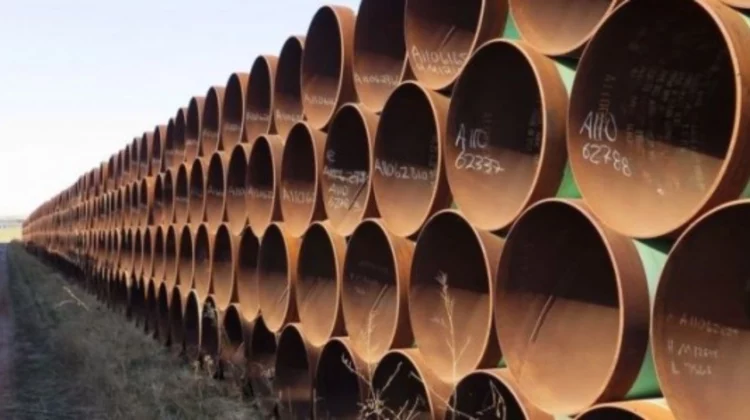
A newly authorized pipeline project between Canadian and U.S. energy developers is poised to significantly reshape crude oil flows across North America, potentially increasing Canada’s crude exports to the United States by more than 12 percent.
The proposal, jointly developed by Canadian pipeline firm South Bow and U.S.-based Bridger Pipeline, would have the capacity to transport over 1 million barrels of oil per day once fully operational. If built as planned and integrated into existing infrastructure, analysts say it could meaningfully expand Canada’s role as the largest foreign supplier of crude oil to the United States.
The announcement comes amid renewed political focus on energy security, global supply disruptions, and volatile oil prices driven by geopolitical tensions.
The scale of the Bridger Pipeline project
Capacity and export impact
Bridger Pipeline’s project is designed to move more than 1 million barrels per day across the Canada–U.S. border. Energy analysts cited in industry reporting estimate that this would translate into more than a 12 percent increase in Canada’s crude exports to the United States.
Canada already exports vast volumes of oil south of the border. In 2025 alone, Canada shipped approximately 1.64 billion barrels of crude oil and petroleum products to the U.S., reinforcing its position as the dominant supplier to American refineries.
The new pipeline would therefore not just add capacity but deepen an already highly integrated energy relationship between the two countries.
Route and infrastructure links
The pipeline route differs from previously cancelled projects such as Keystone XL, although it revives portions of earlier infrastructure planning.
On the Canadian side, it is expected to align closely with existing corridor approvals and previously developed rights-of-way. South Bow, created after the restructuring of TC Energy’s Keystone XL assets in 2024, retains regulatory groundwork that may accelerate development timelines.
In the United States, however, the route shifts significantly through Montana and Wyoming, before connecting into major pipeline hubs such as Cushing, Oklahoma, a critical distribution point for North American crude oil.
Political framing: energy dominance and energy security
White House messaging
The project was framed by U.S. officials as a major step toward long-term energy security. White House staff secretary Will Scharf described it as a “huge deal” for energy dominance, emphasizing the strategic importance of stable supply chains.
During the signing event, U.S. President Donald Trump contrasted the decision with previous policy approaches, noting that earlier administrations had blocked pipeline development projects. His comments underscored a broader shift in U.S. energy policy toward expanding fossil fuel infrastructure.
Trump also made remarks suggesting that the United States does not depend on Canadian oil, while simultaneously authorizing infrastructure that would increase those imports, highlighting a tension between political messaging and energy market realities.
Keystone XL’s legacy and partial revival
A cancelled project returns in a new form
The Bridger Pipeline project is widely viewed as a partial revival of the long-contested Keystone XL pipeline, which was ultimately cancelled under former U.S. President Joe Biden.
While the new pipeline is not identical in route, it reuses certain Canadian-side elements of earlier Keystone XL planning, including regulatory approvals and corridor development.
This reuse of infrastructure planning is expected to reduce some early-stage delays, even though U.S. routing changes require entirely new federal permitting.
South Bow’s role in the transition
South Bow, the Canadian partner in the project, emerged following TC Energy’s restructuring of Keystone XL-related assets. The company has also been evaluating other export concepts, including the Prairie Connector project, which would move Alberta crude toward U.S. border entry points and beyond.
Alberta’s energy strategy and political support
Provincial backing
Alberta Premier Danielle Smith has strongly supported the pipeline initiative, describing it as the result of years of provincial advocacy aimed at expanding export capacity for the province’s oil sands production.
She stated that the project could initially move more than half a million barrels of Alberta crude per day into U.S. refineries, with potential for further expansion.
Smith framed the development as a step toward strengthening North American energy security while also expanding global market reach for Alberta producers.
Economic implications for producers
For Alberta’s oil sector, increased export capacity could mean higher production potential and improved market access. Analysts suggest that infrastructure constraints have long limited Canadian producers’ ability to fully capitalize on global demand conditions.
A pipeline of this scale could reduce transportation bottlenecks and improve price realization for Western Canadian Select crude, which often trades at a discount due to limited export options.
Expert analysis: capacity, costs, and timelines
Potential throughput and market response
Energy analysts, including Heather Exner-Pirot of the Macdonald-Laurier Institute, estimate that the pipeline could eventually carry between 500,000 and 1 million barrels per day depending on market conditions and investment decisions.
She noted that final volumes will depend on demand signals from U.S. refiners and global crude pricing dynamics.
Infrastructure costs and investment scale
Estimates suggest that building out full export infrastructure across North America could require hundreds of billions of dollars in capital investment. Additional pipeline expansions toward Canada’s Pacific coast have also been discussed, potentially adding another layer of cost and complexity.
Experts emphasize that these projects require long-term investor confidence, stable regulatory frameworks, and predictable cross-border trade policy.
Construction timeline expectations
If financial decisions proceed as expected, construction could begin as early as 2029. However, analysts caution that permitting processes, environmental assessments, and political changes could significantly alter timelines.
Contradictions in U.S. energy policy
“We don’t need Canadian oil” versus import dependence
The pipeline approval has reignited debate over U.S. energy messaging. Earlier statements from U.S. leadership suggested that domestic production was sufficient to meet American demand.
However, Canada remains the largest foreign supplier of crude oil to the United States, providing a critical supply base for Midwest and Gulf Coast refineries.
This dependency highlights a structural reality: even with record U.S. production, North American refining systems are deeply integrated and rely heavily on cross-border flows.
Energy geopolitics and global oil volatility
Conflict-driven price swings
Global oil markets have been highly volatile due to geopolitical tensions, including conflict in the Middle East that has disrupted supply expectations and raised concerns about shipping routes such as the Strait of Hormuz.
Brent crude prices have experienced sharp fluctuations, at times surging above 110 dollars per barrel before retreating as markets react to shifting political developments.
Inflation and consumer impact
Rising energy prices have contributed to inflationary pressure across Europe and North America, increasing transportation and food costs. In some regions, gasoline prices have exceeded 2 dollars per litre, prompting changes in consumer driving behavior and fuel consumption patterns.
Canada’s role in global energy supply
Major producer with export constraints
Canada is the fourth-largest oil producer in the world, producing more than 5 million barrels per day. Despite this scale, export constraints have long limited the country’s ability to fully monetize production growth.
The majority of Canadian crude exports flow to the United States, reinforcing deep economic interdependence between the two countries.
Limited diversification beyond the U.S.
While Canada has expanded some alternative export routes, including the Trans Mountain pipeline expansion to the Pacific coast, the U.S. remains overwhelmingly dominant as a destination market.
This reliance continues to shape Canadian energy policy debates around diversification and infrastructure development.
Economic and strategic implications
Strengthening North American integration
The Bridger Pipeline project reinforces the long-standing integration of the North American energy system. Crude oil, refined products, and natural gas already move across borders in large volumes daily.
New infrastructure would further lock in this relationship, increasing efficiency but also deepening mutual dependency.
Strategic energy security goals
For policymakers, the pipeline represents both opportunity and risk. It strengthens supply reliability for U.S. refineries while offering Canada expanded export capacity. However, it also ties both countries more closely to long-term fossil fuel demand trends at a time when global energy transition pressures are increasing.
Conclusion: a project that reflects old tensions and new realities
The proposed Bridger Pipeline illustrates the continuing complexity of North American energy politics. It revives elements of cancelled infrastructure plans, aligns with shifting political priorities in Washington, and responds to Canada’s long-standing challenge of export capacity limitations.
At the same time, it raises broader questions about energy dependence, market volatility, and long-term investment in fossil fuel infrastructure during a period of global transition.