Stick to the Facts
Add Nbsla.ca as a Preferred Source on Google to see more of our stories in your search results.

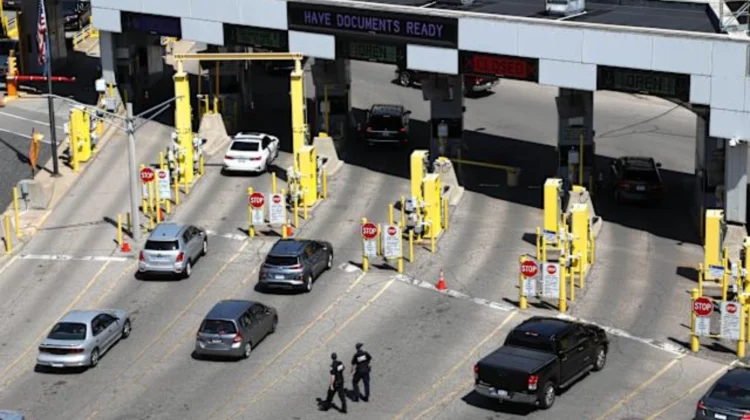
For decades, travel between Canada and the United States felt almost effortless for most tourists. Canadians could drive across the border for shopping trips, family visits, weekend getaways, or longer stays with relatively little concern beyond routine documentation. That experience is changing.
Under the continued enforcement approach associated with President Donald Trump’s immigration policies and subsequent tightening of border security practices, entry into the United States has become significantly more restrictive for many foreign nationals. Canadians, despite their close diplomatic relationship with the US, are increasingly discovering that they are not exempt from strict enforcement rules.
What is surprising many travelers is not just the rules themselves, but how consistently they are now being applied. Even minor past offenses, old charges without convictions, and simple mistakes at the border are now more likely to trigger denial of entry.
The result is a growing number of Canadians being turned away at land crossings and airports, sometimes permanently flagged in US systems unless they take formal legal steps to regain eligibility.
Why Canadians Are Not Treated Differently Under US Immigration Law
The assumption of “friendly neighbor privilege” is fading
Historically, Canadians often believed they benefited from informal leniency when entering the United States. While travel between the two countries has always been regulated, enforcement in practice sometimes felt more flexible for low-risk travelers.
That assumption no longer holds in many cases.
US immigration law treats all non-citizens the same at the border: entry is a privilege, not a right. Even citizens of close allies such as Canada are subject to the same inadmissibility rules as any other foreign traveler.
The enforcement authority responsible is the U.S. Customs and Border Protection agency, known as CBP, which has wide discretion to approve or deny entry based on records, behavior, and perceived risk.
How US and Canadian Authorities Share Criminal Records
Integrated databases now shape border decisions instantly
One of the biggest changes affecting Canadian travelers is the depth of information sharing between Canada and the United States.
Canadian law enforcement data from the Royal Canadian Mounted Police is now routinely shared with US authorities. This means CBP officers can often see:
Past convictions
Pending charges
Arrests without conviction
In some cases, historical criminal records that travelers assumed were irrelevant or forgotten
This integration has become significantly more robust over the past decade, especially since around 2015, when cross-border security cooperation increased.
As a result, travelers who believe their record is “minor” or “too old to matter” are often surprised when it appears instantly during border inspection.
Even individuals who were never convicted can be flagged if there is a record of arrest or charge.
A Reddit Traveler’s Mistake That Led to a Border “Red Flag”
A preventable error that escalated quickly
A recent case shared on Reddit highlights how easily Canadians can run into serious issues at the US border.
The traveler explained that they attempted to enter the United States twice by driving across the border and were refused both times. They later realized the problem stemmed from a prior legal issue involving theft under $5,000 CAD, for which they had received a conditional discharge and probation.
The individual admitted they did not properly address their admissibility status before attempting to travel.
After the second refusal, they believed they had been “red-flagged” in the CBP system.
Their key mistake was attempting entry without resolving their inadmissibility status first. Each failed attempt reinforced their profile in the system, making future entry more difficult.
The traveler also noted they now plan to apply for a waiver of inadmissibility before trying again.
Why Even Old or Minor Offenses Can Block Entry
US immigration law focuses on categories, not personal perception of severity
One of the most misunderstood aspects of US border enforcement is that the seriousness of an offense is not always judged the same way by travelers and border officials.
Crimes involving what US law calls “moral turpitude” can include:
Theft
Fraud
Assault
Drug-related offenses
Certain DUI cases depending on circumstances
Even if these incidents occurred years or decades ago, they may still impact admissibility.
In some cases, even charges that did not result in conviction can raise concerns if they appear in shared databases.
The key issue is not only what happened, but how the law categorizes the offense under immigration rules.
Why Some Canadians Are Denied Without Clear Explanation
Broad officer discretion at the border
Another growing concern among travelers is the level of discretion exercised by CBP officers during inspections.
Border officers are legally allowed to deny entry if they believe a traveler is inadmissible or poses risk, even if the traveler has no obvious criminal record.
Some travelers report being refused entry without detailed explanations, especially when secondary inspection is involved.
In one widely reported case, a Canadian traveler described being told they could either return to Canada or face detention and judicial processing, without receiving a clear reason for denial.
CBP officers are not required to provide full disclosure of their reasoning at the border, which can leave travelers confused about what triggered the decision.
Factors may include:
Answers given during questioning
Past travel history
Electronic device inspections
Information found in databases
Behavior or inconsistencies during inspection
Electronic device searches have also increased significantly in recent years, adding another layer of scrutiny for some travelers.
The Growing Role of Electronic Device Inspections
Phones and laptops are now part of border screening
Modern border inspections increasingly include digital searches. Officers may request access to phones, laptops, or tablets if they believe additional screening is necessary.
These searches can influence admissibility decisions if content raises concerns or contradicts statements made during questioning.
While not every traveler is subject to such searches, the possibility has become more common, especially in secondary inspections.
This shift has made border crossings more unpredictable for some individuals, even those without criminal histories.
What Happens When a Traveler Is Declared Inadmissible
Being refused entry is not always permanent, but it is serious
When a CBP officer determines that a traveler is inadmissible, they are typically denied entry and returned to Canada.
In more serious cases, the individual may be flagged in the system, affecting future attempts to enter the United States.
Inadmissibility does not always mean a permanent ban, but it does mean the traveler must take corrective steps before attempting entry again.
Without resolution, repeated attempts often result in repeated refusals.
The US Waiver System That Can Restore Entry Rights
Form I-192 waiver of inadmissibility explained
For Canadians and other foreign nationals deemed inadmissible, the United States offers a legal pathway to regain entry permission through a waiver system.
The primary option is Form I-192, known as the Application for Advance Permission to Enter as a Nonimmigrant.
This waiver allows individuals with criminal records or certain immigration violations to request permission to enter the US temporarily.
Key points of the waiver include:
Application fee of approximately 1,100 US dollars
Processing time often ranging from 6 to 12 months
Validity period of up to 5 years if approved
No guarantee of approval even after submission
Applicants must submit detailed documentation and undergo review by US authorities. Many choose to hire immigration lawyers, although some apply independently due to cost.
Approval rates are not guaranteed and vary depending on the case.
Why Some Canadians Are Still Refused Despite Old Records Being “Cleared”
Time does not automatically erase immigration consequences
A common misconception is that old offenses disappear after a certain period.
However, in US immigration law, even decades-old convictions can still matter, especially if they fall into restricted categories.
There have been reported cases of travelers being denied entry due to incidents from more than 20 or 30 years ago.
Even when Canadian records are pardoned or sealed domestically, US authorities may still consider the original offense relevant for admissibility purposes.
This difference between Canadian record management and US immigration law often surprises travelers.
The Most Common Reasons Canadians Are Turned Away
Patterns seen at the border
While each case is unique, common reasons for denial include:
Criminal convictions, even minor ones under US classification standards
Prior arrests or charges without conviction
Drug-related offenses, including historical cases
Fraud or theft-related offenses
Inconsistencies during questioning
Issues discovered during document or device checks
Previous refusals or flagged entries
In many cases, the final decision depends on the discretion of the CBP officer reviewing the traveler.
What Canadian Travelers Can Do to Avoid Problems
Preparation is now essential, not optional
Given the current enforcement environment, Canadians with any past legal issues are advised to take proactive steps before attempting US travel.
These include:
Checking personal criminal record status in Canada
Understanding whether offenses fall under US inadmissibility categories
Applying for a waiver if required before travel
Avoiding assumptions that old or minor charges are irrelevant
Preparing documentation for border inspection
For travelers with clean records, entry remains generally straightforward. However, unpredictability increases significantly once any legal history exists.
Conclusion: A More Controlled and Less Forgiving Border Era
The US–Canada border is still one of the busiest and most important international crossings in the world, but it is no longer the informal or lenient passage many Canadians once assumed it to be.
Stricter enforcement, deeper data sharing, and expanded officer discretion have created a system where even minor past issues can have major consequences.
For Canadians with clean histories, travel remains relatively smooth. For those with even small legal complications, however, preparation has become essential.