Stick to the Facts
Add Nbsla.ca as a Preferred Source on Google to see more of our stories in your search results.

remarkable scientific discovery is giving conservationists fresh hope in the battle against invasive species across Britain. Researchers have identified a previously unknown “killer fungus” that attacks and destroys an aggressive invasive species known as heath-star moss, a plant that has spread rapidly across the UK and displaced native vegetation for decades.
The discovery has sparked excitement among ecologists because invasive species are notoriously difficult to control. In many cases, governments and conservation groups spend millions of pounds trying to limit the spread of invasive species, often with limited success. However, this newly identified fungus appears to be doing the work naturally, raising hopes that damaged ecosystems could eventually recover.
The discovery was made by scientist Dr. George Greiff, whose years of observation and research led to the identification of what is now being called the moss die-back fungus. The fungus specifically targets heath-star moss, one of the most successful invasive species found throughout Britain and parts of Europe.
How the Discovery of the Killer Fungus Happened
The story began four years ago when Dr. George Greiff noticed unusual patches of dead heath-star moss while walking along a cliffside on the Isle of Wight.
At first, he collected samples but struggled to determine what was causing the moss to die. Over time, he continued finding similar dead patches in different locations, suggesting that a widespread biological process was taking place.
Working alongside scientists in Britain and France, Greiff eventually identified the culprit: a completely new fungal species never before recorded by science.
The newly discovered fungus infects heath-star moss and gradually kills it, creating distinctive circular patches of dead vegetation. These circles have become known as “fairy rings of death” because of their appearance on landscapes where the invasive species once dominated.
For researchers studying invasive species, the discovery is particularly important because natural controls are rare. Most invasive species spread unchecked because they leave behind the predators, diseases, and parasites that kept them under control in their native environments.
Why Heath-Star Moss Is Considered an Invasive Species
Although many people may never have heard of heath-star moss, scientists consider it one of Britain’s most successful invasive species.
Researchers believe the plant arrived in Britain sometime during the 1940s, likely originating from the Southern Hemisphere. Once established, it spread at an extraordinary rate.
By the 1990s, heath-star moss had become widespread throughout the country.
The invasive species thrives in a variety of environments, including heathlands, dunes, forests, gardens, fences, and even cracks in tarmac. Its ability to produce spores and reproduce rapidly allows it to outcompete native mosses and dominate entire habitats.
While it may appear attractive with its bright green appearance, conservation experts warn that the invasive species has caused significant ecological damage.
Native mosses, which evolved over thousands of years to support local wildlife and ecosystems, often disappear when heath-star moss takes over.
As a result, habitats that once supported diverse communities of insects, fungi, molluscs, and plants can become dominated by a single invasive species.
Britain’s Growing Invasive Species Problem
The heath-star moss invasion is only one example of a much larger challenge facing Britain’s natural environment.
Scientists estimate that approximately 2,000 non-native plants and animals have been introduced into Britain through human activity.
Some were brought intentionally, while others arrived accidentally through trade and travel.
A small percentage of these introduced organisms become invasive species capable of transforming ecosystems.
Among the most famous examples are the grey squirrel and Japanese knotweed.
The grey squirrel, originally introduced from North America, has severely impacted native red squirrel populations. Japanese knotweed, meanwhile, is notorious for damaging buildings, roads, and infrastructure.
Rhododendron is another invasive species that has altered woodland ecosystems by releasing chemicals into the soil that suppress native plant growth.
The spread of heath-star moss represents yet another example of how invasive species can dramatically reshape landscapes and threaten biodiversity.
The Importance of Mosses in British Ecosystems
Many people overlook mosses, but they play a crucial role in maintaining healthy ecosystems.
Britain is home to more than 1,000 different moss species, many of which serve as the foundation of sensitive habitats.
Mosses help regulate moisture levels, provide shelter for insects, support fungal communities, and contribute to carbon storage.
In peatlands, mosses are especially important because they help lock away vast amounts of carbon that would otherwise contribute to climate change.
Native mosses also form essential components of rare temperate rainforests found in parts of Britain.
When invasive species like heath-star moss replace native mosses, these ecological functions can be disrupted.
Scientists have observed locations where native moss populations have significantly declined or even disappeared after the invasive species established itself.
The Fascinating Search for the Moss Die-Back Fungus
Dr. George Greiff’s research involved extensive fieldwork across Britain.
He spent years searching for signs of the fungus in different habitats and documenting where infections occurred.
Today, confirmed cases of the moss die-back fungus have been found across England and Wales.
The scientist jokingly notes that the fungus distribution map closely resembles a map of his holiday destinations because he constantly searches for evidence of its presence wherever he travels.
The identification process required sophisticated DNA sequencing technology.
Laboratory analysis revealed that the fungus wraps itself around moss stems and eventually penetrates the plant’s cells, causing the invasive species to die.
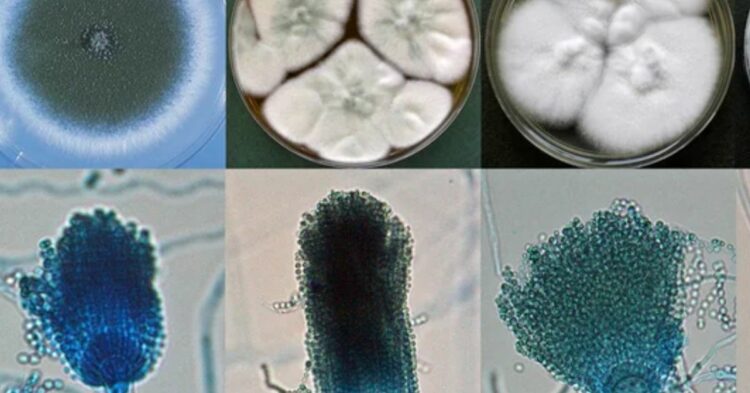
Under microscopes, researchers observed white fungal growths attached to infected moss plants.
These tiny structures produce spores that allow the fungus to spread naturally through infected moss populations.
A Close Relative of the Ash Dieback Fungus
One of the most surprising findings emerged during genetic analysis.
Scientists discovered that the moss die-back fungus is closely related to the fungus responsible for ash dieback disease.
Ash dieback has devastated Britain’s ash tree population and is believed to have killed tens of millions of trees.
Naturally, researchers initially worried that the newly discovered fungus might pose broader environmental risks.
Fortunately, current evidence suggests that the moss die-back fungus is highly specialized.
So far, studies indicate that it primarily infects heath-star moss and only has limited effects on one additional moss species.
Researchers emphasize that more studies are needed, but early findings suggest the fungus poses little threat to wider biodiversity.
Nature Fighting Back Against Invasive Species
Perhaps the most exciting aspect of the discovery is the possibility that it represents a rare case of nature fighting back against invasive species without direct human intervention.
Scientists believe the fungus may have evolved from a native fungal species that gradually adapted to exploit heath-star moss as a host.
If this theory proves correct, it would represent an extraordinary example of ecological adaptation.
Typically, invasive species gain an advantage because local ecosystems lack natural enemies capable of controlling them.
In this case, however, Britain’s native environment may have developed its own biological response.
Dr. Greiff describes the phenomenon as a potentially rare example of the British environment fighting back against invasive species.
For conservationists, such natural biological control mechanisms are highly valuable because they can operate continuously without expensive human intervention.
Why the Discovery Could Transform Habitat Restoration
Controlling invasive species often requires enormous resources.
Mechanical removal, chemical treatment, and habitat management programs can cost millions of pounds and may need to continue indefinitely.
Even then, invasive species frequently return.
The moss die-back fungus offers a completely different approach.
Rather than relying on human efforts, the fungus naturally infects and suppresses heath-star moss populations.
Researchers have already observed encouraging signs.
In areas where the fungus has killed patches of invasive moss, native plants are beginning to reappear.
Young heather plants, for example, have been seen growing in spaces previously occupied by dense mats of heath-star moss.
This suggests that the fungus may create opportunities for habitat recovery and ecological restoration.
Scientists Hope to Unlock More Secrets
Researchers at Amgueddfa Cymru museum are continuing to investigate the fungus and its history.
Scientists are examining preserved moss specimens dating back to the nineteenth century to determine when the fungus first appeared.
These historical collections could reveal whether the fungus has existed unnoticed for decades or whether it emerged more recently.
Understanding its origins may provide valuable insights into how ecosystems naturally respond to invasive species.
Museum experts believe the discovery could help preserve some of Britain’s most unique landscapes and biodiversity hotspots.
A Rare Reason for Optimism
Britain’s biodiversity faces significant challenges.
Conservation assessments indicate that many native species continue to decline, while habitat loss, climate change, and invasive species place increasing pressure on ecosystems.
Against this backdrop, the discovery of the moss die-back fungus offers a rare piece of positive news.
The fungus may not solve the entire invasive species problem, but it demonstrates that ecosystems can sometimes develop their own defenses against ecological threats.
For scientists studying invasive species, the finding represents one of the most exciting discoveries in recent years.
As research continues, the killer fungus could become an important ally in restoring habitats damaged by invasive species and protecting Britain’s unique natural heritage for future generations.
The battle against invasive species is far from over, but the emergence of this natural enemy shows that nature itself may still have a few surprises left in the fight.