Stick to the Facts
Add Nbsla.ca as a Preferred Source on Google to see more of our stories in your search results.

A massive Alaska megatsunami has stunned scientists after new research revealed that a towering wave, nearly 500 metres high, tore through a remote fjord in southeast Alaska after a sudden mountain collapse. The event, now described as one of the most powerful megatsunamis ever recorded, is raising serious concerns about the growing risks linked to melting glaciers and unstable mountain slopes in the Arctic region.
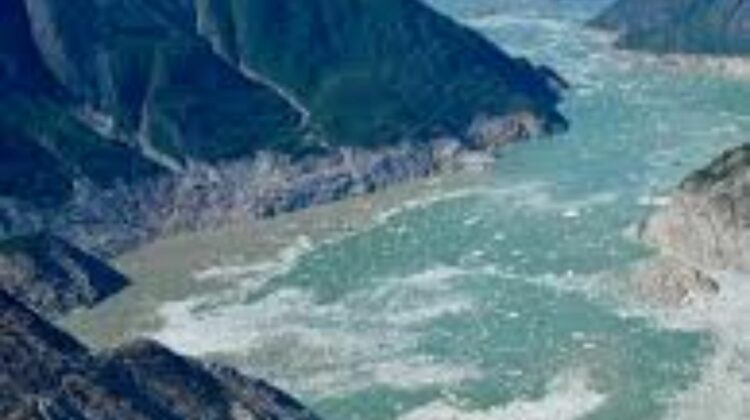
The discovery is based on a detailed scientific analysis of a remote area in Tracy Arm Fjord, a location known for its steep cliffs, icy waters, and dramatic natural landscapes. What happened there last summer remained largely unnoticed at the time, but new evidence shows it was anything but ordinary.
Massive Alaska Megatsunami Triggered by Sudden Mountain Collapse
Researchers found that the massive Alaska megatsunami was triggered when a section of mountain suddenly broke apart and crashed into the fjord below.
According to scientists, an estimated 64 million cubic metres of rock fell into the water in less than a minute. To put that into perspective, this volume is roughly equal to 24 Great Pyramids of Giza collapsing into the sea at once.
This enormous impact displaced an extreme amount of water, generating a megatsunami wave reaching nearly 500 metres in height.
The event is now considered the second tallest megatsunami ever recorded, only behind the historic 1958 Lituya Bay megatsunami in Alaska.
What Is a Megatsunami?
A megatsunami is not the same as a regular tsunami.
Unlike ocean-wide tsunamis caused by underwater earthquakes, megatsunamis are localised but extremely powerful waves triggered by:
- Massive landslides
- Glacier collapses
- Earthquakes loosening unstable rock
- Sudden cliff or mountain failures
When such a collapse happens, the displaced water has nowhere to go except upward, creating a towering wave that can travel rapidly through narrow fjords or bays.
In the case of the massive Alaska megatsunami, the wave was so large that it destroyed vegetation, stripped soil, and reshaped the surrounding landscape within minutes.
Timing That Prevented a Disaster
One of the most striking aspects of the event is that it happened in the early hours of the morning when no cruise ships or tourist vessels were nearby.
Tracy Arm Fjord is a popular destination for cruise tourism, known for its glaciers and dramatic cliffs. Scientists believe that if the collapse had occurred during the day, the outcome could have been far more dangerous.
Alaskan geologist Dr Bretwood Higman, who later visited the site, described it as a “close call”, warning that future events may not be so fortunate.
He noted that:
“We know that there were people that were very nearly in the wrong place.”
Devastation Left Behind in Tracy Arm Fjord
When researchers arrived weeks after the megatsunami, the landscape showed clear evidence of extreme force.
They found:
- Entire sections of forest flattened
- Trees ripped from mountainsides and thrown into the water
- Large areas of exposed rock stripped of soil and vegetation
- Scarring along steep cliff faces showing the path of collapse
The damage highlighted how violently the wave had moved through the fjord in such a short time.
Why Alaska Is So Vulnerable to Megatsunamis
Alaska is considered one of the most high-risk regions in the world for megatsunamis due to its unique geography:
- Steep mountain walls that rise directly from water
- Deep, narrow fjords that amplify wave energy
- Frequent seismic activity and earthquakes
- Large amounts of unstable rock and ice
These natural conditions make the region especially sensitive to sudden landslides.
Climate Change and the Growing Megatsunami Risk
One of the most concerning findings from the new study, published in Science, is the link between climate change and increasing instability in the region.
As glaciers continue to melt, they remove the natural “support system” that has held many mountain slopes in place for thousands of years. Without this ice pressure, slopes can weaken and collapse more easily.
Scientists warn that:
- Warming temperatures are accelerating glacier retreat
- Thawing permafrost is reducing ground stability
- Rock faces are becoming more exposed and fragile
This combination increases the likelihood of future landslides capable of triggering another massive Alaska megatsunami.
Comparison With the Largest Megatsunamis in History
The Tracy Arm event is now ranked among the most extreme megatsunami events ever documented.
- 1958 Lituya Bay megatsunami (Alaska) – over 500 metres high
- Tracy Arm megatsunami (recent event) – nearly 500 metres high
Both events occurred in Alaska, highlighting the region’s unique geological risk profile.
What Scientists Are Warning Now
Experts emphasize that this event should not be viewed as a rare anomaly.
Instead, it may be part of a broader pattern driven by environmental change.
Key concerns include:
- Increased frequency of large landslides
- Greater instability in glacier-adjacent mountains
- Higher risk to cruise tourism routes
- Limited ability to predict sudden collapses
Researchers are now calling for improved monitoring systems in vulnerable fjords, especially those frequented by ships.
The massive Alaska megatsunami serves as a powerful reminder of how quickly landscapes can change in extreme environments.
While no lives were lost in this event, scientists warn that future megatsunamis could occur in less remote or less fortunate circumstances.
As climate change continues to reshape polar regions, the risk of similar megatsunamis in Alaska may grow, making early detection and geological monitoring more important than ever.
For now, the Tracy Arm event stands as one of the clearest real-world examples of nature’s raw power — and a warning that the next megatsunami may not be so easily avoided.