Stick to the Facts
Add Nbsla.ca as a Preferred Source on Google to see more of our stories in your search results.

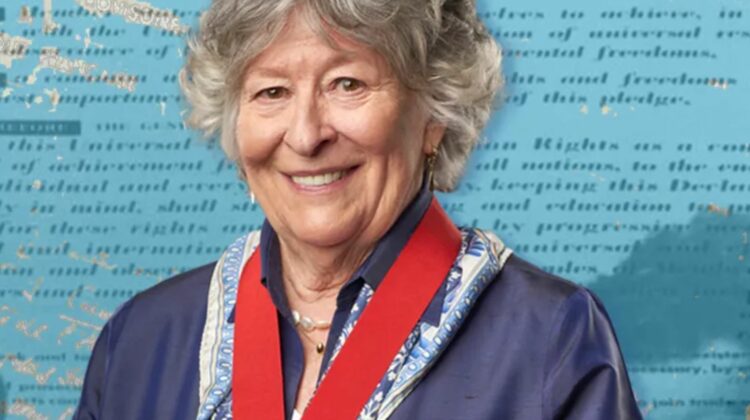
Canada is preparing for a significant moment in its constitutional leadership as Louise Arbour has been named the next governor general of Canada, set to replace Mary Simon, who has held the position since 2021. The announcement marks a historic transition in the office of the governor-general, bringing one of Canada’s most respected legal minds into the country’s highest ceremonial role.
The appointment, confirmed in Ottawa, signals a new chapter for the new governor general of Canada, with Arbour expected to officially assume office in a formal ceremony in early June 2026.
Louise Arbour Becomes Canada’s New Governor General
The federal government has chosen Louise Arbour as the new governor general, replacing outgoing Mary Simon, who was appointed during the previous administration.
The announcement was made in Ottawa with Prime Minister Mark Carney, marking a major leadership transition in Canada’s constitutional framework.
Arbour will now serve as the King’s representative in Canada, fulfilling the duties of governor general of Canada, one of the most important ceremonial and constitutional roles in the country.
Who Is Louise Arbour? A Look at the New Governor General
At 79 years old, Louise Arbour governor general designate brings a long and distinguished legal and diplomatic career to Rideau Hall.
Key Background:
- Born in Montreal
- Called to the Quebec Bar in 1971
- Called to the Ontario Bar in 1977
Her career spans national courts, international justice, and global human rights leadership, making her one of the most experienced figures ever appointed as governor general.
A Career Built on Law, Justice, and Human Rights
Before becoming new governor general of Canada, Arbour built a reputation as a global legal authority.
Major Roles in Canada:
- Professor at York University’s Osgoode Hall Law School
- Judge, Ontario Superior Court of Justice (1987)
- Judge, Ontario Court of Appeal (1990)
- Justice of the Supreme Court of Canada (1999–2004)
Her appointment to the Supreme Court of Canada placed her at the heart of Canadian constitutional law, shaping decisions that continue to influence the justice system today.
International Leadership: UN Human Rights Chief
Beyond Canada, Arbour played a major role on the world stage.
- Chief Prosecutor for UN Tribunals (Yugoslavia and Rwanda)
- UN High Commissioner for Human Rights (2004–2008)
These roles made her a globally recognized voice in justice and accountability, strengthening her profile long before becoming the governor general of Canada.
Role in Canada’s Military Review
More recently, Arbour was appointed by the federal government to lead a major independent review into misconduct in the Canadian Armed Forces.
Her 2022 report called for:
- Structural reform in military leadership
- Cultural change within the armed forces
- Stronger accountability systems
This work further cemented her reputation as a reform-oriented leader ahead of her appointment as new governor-general.
What Does the Governor General of Canada Do?
The governor-general represents the monarch in Canada and carries out key constitutional and ceremonial duties.
Responsibilities include:
- Giving royal assent to laws passed by Parliament
- Swearing in prime ministers and cabinet ministers
- Acting as Commander-in-Chief of the Canadian Armed Forces
- Representing Canada at national ceremonies and state functions
Although largely ceremonial, the role of governor general of Canada is essential to maintaining Canada’s constitutional monarchy system.
Mary Simon’s Tenure as Governor General
Before Arbour’s appointment, Mary Simon served as the governor-general of Canada beginning in 2021.
Her tenure was historic as she became:
- The first Indigenous governor general in Canadian history
- A strong advocate for reconciliation and Indigenous representation
Her term will officially conclude when Arbour is sworn in as the new governor general of Canada.
Transition to the New Governor General of Canada
Arbour’s appointment reflects continuity in Canada’s constitutional system while introducing a leader with deep judicial and international experience.
She is expected to assume office in early June 2026 after a formal installation ceremony at Rideau Hall.
Upon taking office, she will immediately become Canada’s top representative of the Crown and serve as Commander-in-Chief of the military.
Arbour’s Vision for the Role
In her remarks following the announcement, Arbour emphasized the importance of Canada’s constitutional system, stating:
She views the governor general of Canada role as one that ensures continuity, stability, and institutional trust within Canadian democracy.
Her experience in law, governance, and human rights suggests a focus on:
- Institutional integrity
- Constitutional balance
- Public trust in governance
Why This Appointment Matters for Canada
The selection of Louise Arbour as governor general is significant for several reasons:
- She brings decades of judicial experience
- She has global human rights leadership credentials
- She has already worked closely with federal governments
- She represents continuity in Canada’s constitutional system
This makes her one of the most experienced individuals ever appointed to the role of governor general.
The appointment of Louise Arbour as new governor general of Canada marks a major transition in the country’s constitutional leadership.
As she prepares to succeed Mary Simon, Canada enters a new phase of governance under a figure known for her legal expertise, international leadership, and commitment to justice.
With her installation expected in June 2026, all eyes will be on how the next chapter of the governor general of Canada role unfolds under her leadership.