Stick to the Facts
Add Nbsla.ca as a Preferred Source on Google to see more of our stories in your search results.

A growing hantavirus outbreak connected to a cruise ship has triggered international concern, renewed questions about hantavirus transmission, and intensified monitoring efforts by health officials across several countries. The latest hantavirus news has focused heavily on the mysterious Andes virus strain linked to the cruise ship outbreak, which has already caused multiple deaths and led to emergency contact tracing operations.
Public health experts say this is not currently a global emergency on the scale of COVID-19, but the situation has pushed terms like “hantavirus map,” “cruise hantavirus map,” “new virus on cruise,” and “will hantavirus become a pandemic” into trending searches worldwide.
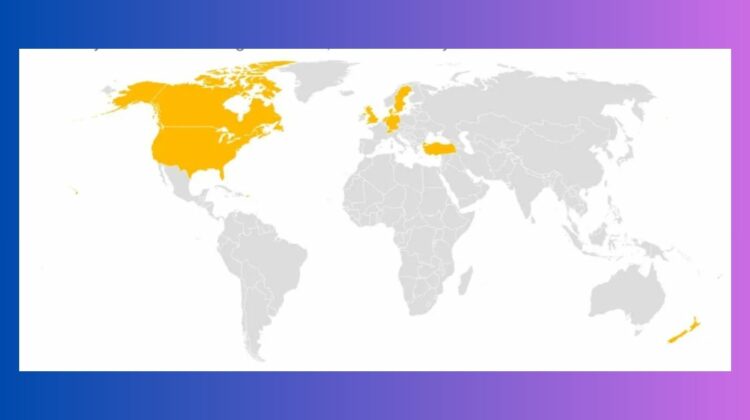
Health agencies, including the Centers for Disease Control and Prevention, are now monitoring possible exposures in the United States, the United Kingdom, Singapore, South Africa, Canada, and the remote Atlantic territory of Saint Helena.
What Is Hantavirus Virus?
Many people are now asking: what is hantavirus virus, and why are experts taking the cruise ship hantavirus outbreak so seriously?
Hantaviruses are a family of viruses primarily carried by rodents. The disease is often called a “rat virus” because infected rodents spread the virus through urine, saliva, and droppings. Humans can become infected after inhaling contaminated particles in the air.
The virus is most commonly associated with:
- Rodents in cabins, barns, storage spaces, and ships
- Poorly ventilated enclosed areas
- Exposure to dried rodent droppings
- Contaminated dust particles
The CDC says hantavirus cases remain rare in North America, but infections can become extremely serious once symptoms appear.
Deadly Hantavirus Outbreak on Cruise Ship Sparks Global Alarm as Vessel Heads to Canary Islands
Cruise Ship Hantavirus Outbreak Raises International Alarm
The current virus outbreak has drawn intense attention because investigators believe the Andes virus strain involved may have rare human-to-human transmission capability.
That has dramatically increased concern over:
- How contagious is hantavirus?
- Can hantavirus spread from human to human?
- Is the hantavirus contagious?
- Hantavirus human to human transmission
- Will hantavirus become a pandemic?
According to officials, the cruise ship hantavirus outbreak began after several passengers became ill during a voyage connected to South America and Ushuaia. Authorities suspect exposure may have occurred during a birdwatching excursion.
Three people have reportedly died, while additional hantavirus cases remain under investigation.
The cruise ship hantavirus location became a major focus after passengers disembarked in Saint Helena before officials fully understood the illness involved.
Hantavirus Map: Where Health Officials Are Monitoring Cases
The latest hantavirus map includes multiple countries and several U.S. states where passengers traveled after leaving the ship.
The cruise hantavirus map currently includes:
- United States
- Canada
- United Kingdom
- Singapore
- South Africa
- Argentina
- Saint Helena
Within the United States, authorities are paying particular attention to:
- hantavirus in Georgia
- hantavirus California
- hantavirus Virginia
- hantavirus in the US generally
- Arizona
- Texas
Officials say passengers from at least 12 countries may have been exposed.
Hantavirus in the US: States Monitoring Potential Exposures
The hantavirus in the US situation is now being monitored carefully by state and federal health agencies.
Hantavirus California
California has long recorded occasional hantavirus cases because of deer mouse populations in rural regions. Now, California is again under scrutiny because cruise ship passengers reportedly returned there after exposure concerns emerged.
Hantavirus in Georgia
Health officials are also investigating possible exposures linked to passengers who traveled through Georgia. Searches for “hantavirus in Georgia” have surged as residents seek updates about possible infections.
Hantavirus Virginia
Although no major outbreak has been confirmed in Virginia, public health departments are reportedly reviewing travel-related exposure risks. Interest in “hantavirus Virginia” continues growing as the cruise outbreak develops.
Texas and Arizona Monitoring
Texas officials confirmed that individuals who left the ship are being monitored for symptoms. Arizona health authorities also said a potentially exposed person is under observation for 42 days.
How Contagious Is Hantavirus?
One of the biggest questions during this hantavirus update is: how contagious is hantavirus?
Most hantaviruses do not spread easily between humans. In fact, nearly all known infections occur after exposure to infected rodents or contaminated environments.
However, the Andes virus strain involved in this outbreak has previously shown evidence of limited human-to-human transmission in South America.
That is why experts are urgently studying:
- hantavirus transmission patterns
- whether mutations have occurred
- how efficiently the virus spreads
- whether respiratory droplets play a role
Scientists currently believe infected individuals may become contagious mainly after symptoms begin.
Can Hantavirus Spread From Human to Human?
The question “can hantavirus spread from human to human” has become central to the investigation.
Researchers say:
- Most hantaviruses are not contagious between people
- Andes virus may spread in rare situations
- Close contact may increase risk
- Scientists are still investigating transmission routes
Experts stress that current evidence does not suggest widespread easy transmission like influenza or COVID-19.
Still, because viruses can evolve, scientists are closely analyzing the genetics of the strain linked to the cruise ship hantavirus outbreak.
Flight Attendant Hantavirus Concerns Grow
Searches for “flight attendant hantavirus” have also increased because exposed cruise passengers traveled internationally after leaving the ship.
Public health teams are now reviewing:
- Airline passenger lists
- Flight crews
- Airport contacts
- Secondary exposures
Authorities say the risk to the general public remains low, but international coordination has intensified as officials attempt to track every possible exposure chain.
CDC and Global Health Agencies Begin Contact Tracing
The CDC and international health authorities are now engaged in extensive contact tracing operations.
The goal is to:
- Identify exposed individuals
- Monitor symptoms
- Prevent additional spread
- Determine whether human-to-human transmission occurred
Officials in Saint Helena ordered some higher-risk contacts to isolate for up to 45 days.
Meanwhile:
- Singapore isolated two passengers for testing
- Canadian officials advised self-isolation
- British authorities are monitoring passengers and contacts
- U.S. state agencies are tracking travelers
This large-scale response reflects uncertainty about the Andes virus involved in the outbreak.
What Are the Symptoms of Hantavirus?
Early hantavirus symptoms can resemble the flu, making diagnosis difficult during the first stage.
Common symptoms include:
- Fever
- Fatigue
- Muscle aches
- Chills
- Headaches
- Nausea
- Coughing
- Breathing difficulties
Severe cases can rapidly progress into hantavirus pulmonary syndrome, a dangerous lung condition that may become fatal.
Why Rodents Remain the Biggest Risk
Despite fears surrounding human transmission, rodents remain the main source of infection worldwide.
Health experts continue warning people to avoid exposure to:
- Mouse droppings
- Rat urine
- Contaminated dust
- Infested cabins or storage areas
The “rat virus” nickname comes from the virus’s strong association with rodent contamination.
Cruise ships can become vulnerable if rodent control measures fail during docking or supply operations.
Will Hantavirus Become a Pandemic?
Searches for “will hantavirus become a pandemic” have exploded online, but infectious disease experts currently say the risk of a global pandemic remains low.
Reasons include:
- Hantavirus cases are still rare
- Human-to-human transmission appears limited
- Most infections still involve rodents
- No evidence currently shows rapid global spread
However, scientists are not dismissing the situation. The unusual cruise ship outbreak and potential Andes virus transmission have raised serious scientific questions.
Researchers are especially focused on whether the virus has changed genetically.
Scientists Race to Understand the Virus
Teams in Argentina are studying the virus connected to the outbreak to determine:
- Whether mutations occurred
- How the virus spreads
- Why the cruise outbreak became deadly
- Whether airborne transmission between people is possible
Experts believe close-range respiratory droplets may play some role in rare situations, though research remains ongoing.
Hantavirus Update: What Happens Next?
The latest hantavirus update suggests health officials are cautiously optimistic that the outbreak can be contained.
At present:
- Only a limited number of confirmed hantavirus cases exist
- Monitoring operations continue globally
- Passengers are being tracked for symptoms
- Scientists are studying the Andes virus urgently
Still, the cruise ship hantavirus outbreak has reminded the world how quickly infectious disease scares can spread internationally through travel.
For now, public health officials continue emphasizing that rodents remain the primary source of infection and that the general public faces low immediate risk.
But as the hantavirus map expands across multiple countries and states, authorities are working aggressively to ensure this virus outbreak does not grow into something far larger.