Stick to the Facts
Add Nbsla.ca as a Preferred Source on Google to see more of our stories in your search results.

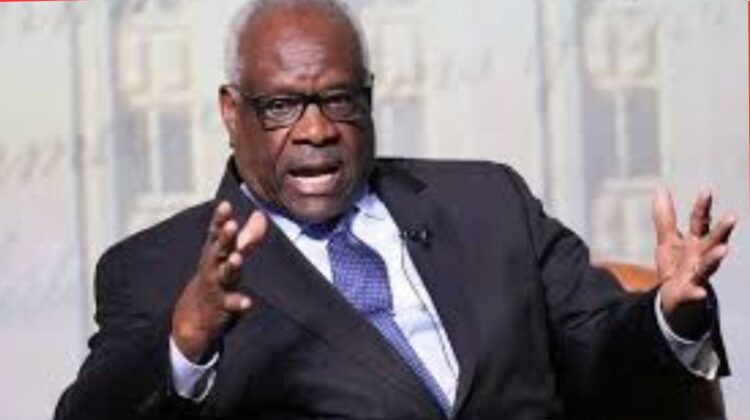
The issue of Clarence Thomas circuit justice security concerns is drawing national attention after Clarence Thomas warned that growing threats against the judiciary are making it increasingly difficult for members of the Supreme Court of the United States to participate in public life.
Speaking during a legal conference in Florida, the longtime Supreme Court justice said the security environment surrounding the nation’s highest court has changed dramatically during his years on the bench. His remarks have reignited debate over judicial safety, political tensions, and the increasing threats faced by judges across the United States.
The comments from Clarence Thomas come at a time when concerns over Clarence Thomas circuit justice security, Supreme Court protection, and threats against federal judges are becoming major national issues.
Clarence Thomas Says Supreme Court Security Threats Have Intensified
During the conference, Clarence Thomas explained that security risks surrounding the Supreme Court are now far more serious than when he first joined the court.
According to Thomas, the role of a circuit justice once allowed for much more freedom in public appearances and community engagement. However, the modern climate surrounding the judiciary has significantly changed.
Thomas stated that security concerns have become “very, very dicey,” highlighting how threats against justices have reshaped daily life for members of the court.
The growing attention around Clarence Thomas circuit justice security reflects wider fears about hostility toward judges, prosecutors, and other legal officials across the country.
Clarence Thomas Circuit Justice Security Concerns Affect Public Life
One of the most striking parts of Thomas’s remarks involved the personal limitations created by security fears.
Clarence Thomas said he can no longer move around as freely as he once did because of safety concerns. The justice explained that participating in public events has become more difficult due to the heightened threat environment surrounding the Supreme Court.
The discussion about Clarence Thomas circuit justice security highlights a broader issue facing many federal judges. Public officials connected to controversial rulings increasingly require tighter protection, restricted travel arrangements, and enhanced security measures.
For Supreme Court justices, these concerns have become especially serious in recent years due to the politically charged atmosphere surrounding major legal decisions.
Supreme Court Requests More Security Funding From Congress
The renewed focus on Clarence Thomas circuit justice security comes as the Supreme Court of the United States seeks additional funding from Congress for enhanced judicial protection.
Court officials have warned lawmakers about rising physical threats, online harassment, cyberattacks, and intimidation campaigns targeting judges and prosecutors.
Security discussions intensified after several high-profile incidents involving members of the federal judiciary. Officials have argued that the current environment requires expanded resources to ensure the safety of judges both inside and outside courthouse facilities.
The conversation surrounding Clarence Thomas circuit justice security has therefore become part of a much larger national debate over protecting judicial independence and preventing violence against public officials.
Brett Kavanaugh Incident Raised Alarm Across Supreme Court
Concerns over judicial safety escalated sharply in 2022 following the incident involving Brett Kavanaugh.
An armed man was arrested near Kavanaugh’s home after the leak of the draft ruling connected to Dobbs v. Jackson Women’s Health Organization decision, which ultimately overturned the constitutional protections established under Roe v. Wade.
That event intensified discussions around Clarence Thomas circuit justice security, Supreme Court protection, and the vulnerability of justices outside official court buildings.
The incident demonstrated how politically sensitive rulings can rapidly increase threats against judges and their families. Since then, security for Supreme Court justices has become an even larger priority for federal authorities.
Political Polarization and Threats Against the Judiciary
The growing debate over Clarence Thomas circuit justice security also reflects rising political polarization in the United States.
Judges at every level of the legal system have reported increased hostility, especially in cases involving abortion rights, elections, constitutional disputes, immigration, and executive authority.
Legal experts warn that attacks or threats against judges can undermine public confidence in the judiciary and weaken democratic institutions.
For members of the Supreme Court, the pressure is especially intense because their rulings often shape national policy and influence major political debates.
As a result, discussions around Clarence Thomas circuit justice security are no longer viewed as isolated concerns but as part of a nationwide challenge involving judicial safety and institutional stability.
Clarence Thomas Remains One of the Most Influential Supreme Court Justices
Clarence Thomas has served on the Supreme Court since 1991, making him one of the longest-serving justices currently on the bench.
Over the years, Thomas has become one of the court’s most influential conservative voices, often shaping decisions on constitutional law, federal authority, gun rights, and administrative power.
Because of his high-profile role, discussions involving Clarence Thomas circuit justice security attract significant public attention. His remarks about security threats reflect the broader pressures now facing Supreme Court justices in an increasingly divided political environment.
Judicial Security Concerns Likely to Continue Growing
The concerns raised by Clarence Thomas suggest that judicial protection will remain a major issue in Washington for years to come.
With political tensions continuing to rise and public anger surrounding controversial rulings becoming more intense, federal courts are expected to push for expanded security measures, additional funding, and stronger protections for judges and their families.
The national focus on Clarence Thomas circuit justice security underscores how dramatically the role of Supreme Court justices has changed in recent decades. What was once primarily a legal position has increasingly become a highly visible and politically charged public role.
As debates over judicial independence, political rhetoric, and court decisions continue, the issue of Clarence Thomas circuit justice security is likely to remain at the center of conversations about the future of the American legal system.