Stick to the Facts
Add Nbsla.ca as a Preferred Source on Google to see more of our stories in your search results.

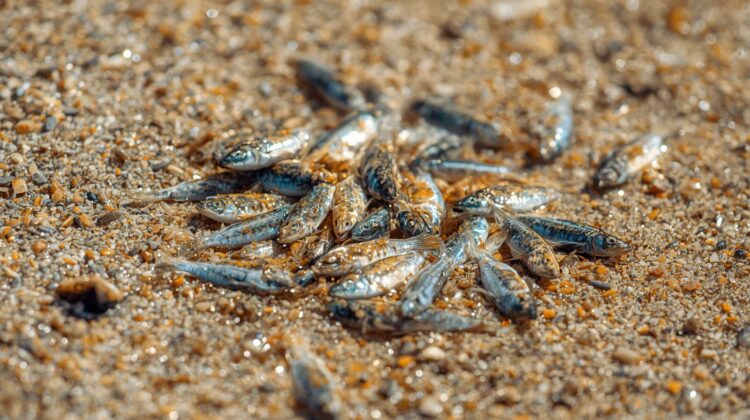
The California coast is seeing an unusual but fascinating sight once more. Thousands of small, bright blue marine creatures known as by-the-wind sailors are washing up along beaches, turning stretches of sand into shimmering blue carpets. From San Diego up to Northern California, walkers are finding these delicate ocean drifters scattered in large numbers, a reminder of how dynamic the Pacific Ocean really is.
What are by-the-wind sailors?
Despite their name, by-the-wind sailors are not ships or sea plants. They are small marine animals called Velella velella. Each one is only a few inches long, with a flat, oval body and a thin, sail-like structure that sticks up from its surface. This natural “sail” allows wind to push them across the ocean surface, which is how they earned the name by-the-wind sailors.
They also have short tentacles hanging underneath, which they use to capture tiny plankton floating in the water. While they look like jellyfish, they are actually close relatives, forming colonies of specialized polyps that work together as a single organism.
Why they are appearing on the California coast again
Scientists say the current surge of by-the-wind sailors on the California coast is tied to seasonal wind patterns. When strong offshore winds blow in the right direction, entire surface populations of these creatures get pushed toward land. Once that happens, waves and tides carry them onto beaches in large numbers.
This kind of mass stranding is not new. It tends to happen every few years, but the scale varies widely. In strong years, millions of by-the-wind sailors can wash up along the California coast, stretching from Baja California all the way to Oregon and Washington.
Ocean conditions like warmer surface waters and shifting wind systems can increase how many end up stranded at once. This year, conditions appear to have aligned in a way that has brought a noticeable bloom of by-the-wind sailors to shore.
Are they dangerous?
Even though they look unusual with their bright blue color and tentacles, by-the-wind sailors are not considered dangerous to people. Their stingers are designed for tiny ocean prey like plankton, not humans. In most cases, picking them up does not cause any harm, although sensitive skin might feel mild irritation.
Marine biologists emphasize that there is no need for concern when seeing by-the-wind sailors covering the beach. It can look dramatic, but it is a natural part of their life cycle.
A short life at sea
By-the-wind sailors spend most of their lives floating at the ocean surface in large groups. They often cluster together in massive colonies, drifting wherever wind and currents take them. From above, these colonies can sometimes look like floating patches of blue glass spread across the sea.
They are also an important food source for marine animals such as sea turtles and ocean sunfish. Their role in the ecosystem helps connect surface plankton to larger predators in the food chain.
However, once they are pushed onto shore, their fate is sealed. The stranded by-the-wind sailors cannot survive out of water for long. Sunlight and dry air quickly dehydrate them, turning their once vibrant blue bodies into pale, fragile remains that eventually break apart and blow away.
A recurring coastal phenomenon
For people living along the California coast, sightings of by-the-wind sailors are becoming a recognizable seasonal event. Social media posts often show beaches covered in thousands of these small creatures, especially after strong winds.
While it may feel unusual, scientists say this has been happening for millions of years. The ocean simply shifts its surface life on and off shore depending on wind and current patterns.
Marine researchers point out that these events are also useful for studying ocean conditions. When large numbers of by-the-wind sailors appear on beaches, it can reveal changes in wind direction, ocean temperature, and surface currents.
What to expect next
These mass strandings usually do not last long. As weather patterns shift, fewer by-the-wind sailors get pushed toward shore, and the ones already on land gradually disappear. Within days or weeks, most are gone, either washed back into the sea or broken down naturally on the beach.
For now, beachgoers along the California coast may continue to see patches of bright blue scattered across the sand. While it may look strange, it is simply one of nature’s repeating cycles playing out in full view.
The next time strong winds hit the Pacific, the by-the-wind sailors may once again drift toward shore, reminding everyone that even the smallest ocean life can move with the force of the wind across an entire coastline.