Stick to the Facts
Add Nbsla.ca as a Preferred Source on Google to see more of our stories in your search results.

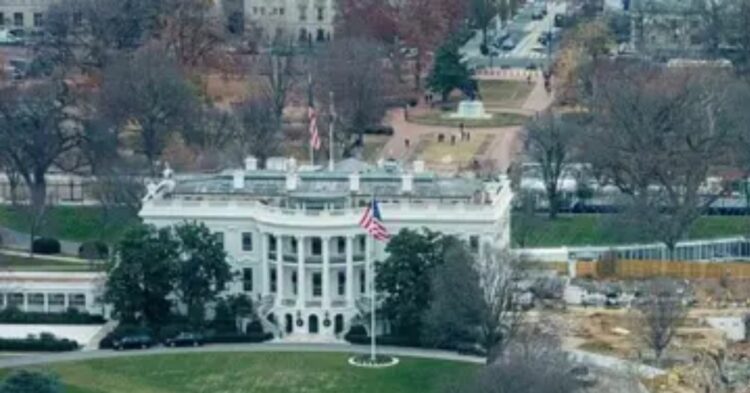
The battle over the future of the White House East Wing has intensified dramatically after the American Institute of Architects (AIA) and a powerful coalition of preservation and architecture organizations formally entered the growing White House East Wing litigation. The escalating legal fight centers on the controversial proposal to demolish parts of the White House East Wing and move forward with a massive new White House Ballroom project that critics argue could permanently damage one of America’s most historically significant public spaces.
The White House East Wing litigation has now become one of the most closely watched preservation and constitutional disputes in the country, with architects, historians, preservationists, and legal experts warning that the proposed project raises serious questions about presidential authority, federal law, historic preservation standards, and the future stewardship of the White House grounds.
On May 27, 2026, the AIA and multiple nonprofit organizations filed an amicus curiae brief in National Trust for Historic Preservation in the United States v. National Park Service, et al., strongly supporting the National Trust’s lawsuit against the proposed White House Ballroom project. Oral arguments in the White House East Wing litigation are scheduled for June 5, 2026, adding even more national attention to the rapidly developing case.
White House East Wing Litigation Centers on Controversial Ballroom Proposal
At the heart of the White House East Wing litigation is a proposal involving the demolition of portions of the White House East Wing and the construction of a large ballroom on the White House grounds. Opponents argue that the project threatens the historic integrity of President’s Park and the broader White House complex, which they say are protected under longstanding constitutional, preservation, and planning laws.
According to the newly filed amicus brief, the White House complex is federal property governed by strict statutory protections and historical preservation requirements. The filing argues that no president possesses unilateral authority to destroy or substantially alter parts of the White House complex without explicit authorization from Congress.
The White House East Wing litigation also challenges the legal basis for privately funded construction on federal historic grounds. The amicus brief specifically argues that donor funding cannot bypass federal approval requirements or grant authority for construction projects that Congress has not approved.
The filing further states that the National Park Service’s own environmental review acknowledged that the proposed White House Ballroom would create “permanent adverse impacts” on the White House grounds’ cultural and historical landscape.
AIA Takes Strong Position in White House East Wing Litigation
The involvement of the American Institute of Architects has significantly elevated the White House East Wing litigation because the organization represents one of the most influential professional architecture groups in the United States.
In a sharply worded statement, 2026 AIA President Illya Azaroff emphasized that the White House East Wing litigation is not merely a political controversy but also a matter of professional ethics, civic responsibility, and legal accountability.
“Architects understand how a building connects to its landscape, its history, and the people it serves,” Azaroff said while discussing the White House East Wing litigation. “The White House and its grounds are among the most consequential public spaces in our democracy, and that distinction carries legal and civic obligations that cannot be set aside.”
Azaroff also stressed that the planning and stewardship of nationally significant landmarks must remain transparent and lawful, warning that decisions affecting the White House grounds carry consequences far beyond ordinary construction disputes.
The AIA’s participation in the White House East Wing litigation signals growing concern within the architectural community that the proposed White House Ballroom could set a dangerous precedent for future federal preservation decisions.
Major Preservation Groups Unite in White House East Wing Litigation
The coalition supporting the White House East Wing litigation includes several of the nation’s most respected preservation and landscape organizations.
Groups joining the amicus brief include:
- The American Society of Landscape Architects
- The Association for Preservation Technology
- The Coalition to Protect America’s National Parks
- The Committee of 100 on the Federal City
- The Cultural Landscape Foundation
- The DC Preservation League
- The National Mall Coalition
- The National Preservation Partners Network
- The Olmsted Network
- The Society of Architectural Historians
The broad alliance reflects how seriously preservation experts are treating the White House East Wing litigation. Many organizations argue that the proposed ballroom project threatens not only architectural history but also the legal framework that protects nationally significant federal properties.
Several preservation advocates involved in the White House East Wing litigation argue that once irreversible changes are made to the White House grounds, the historic damage cannot be undone even if courts later rule against the project.
National Trust Lawsuit Drives White House East Wing Litigation
The underlying White House East Wing litigation was originally brought by the National Trust for Historic Preservation against the National Park Service and other federal defendants.
The lawsuit seeks to block demolition work associated with the proposed White House Ballroom and challenges whether federal agencies properly followed preservation laws, environmental review standards, and congressional approval requirements.
According to the amicus filing, a district court previously issued a preliminary injunction that halted above-ground construction connected to the ballroom proposal. The current appeal in the White House East Wing litigation asks the D.C. Circuit Court to determine whether that injunction should remain in place while the broader case continues.
The preservation coalition argues that allowing construction to proceed before courts fully resolve the legality of the project could result in permanent harm to one of America’s most recognizable historic landscapes.
That argument has become central to the White House East Wing litigation because courts often weigh “irreparable harm” when deciding whether to block construction projects during ongoing legal battles.
White House East Wing Litigation Raises Constitutional Questions
Beyond preservation concerns, the White House East Wing litigation is also raising broader constitutional questions about executive authority.
Legal experts following the case note that the White House complex occupies a unique position as both a working government facility and a protected historic landmark. Critics of the ballroom project argue that presidents cannot independently authorize major structural changes to federally protected spaces without congressional approval.
The amicus brief in the White House East Wing litigation repeatedly emphasizes that constitutional checks and balances still apply to projects involving the White House grounds.
Opponents also argue that bypassing Congress for such a significant construction effort could weaken long-established protections governing national monuments, parks, and historic federal properties across the country.
Supporters of the lawsuit say the White House East Wing litigation may ultimately establish important legal precedent regarding how future administrations manage historically protected government sites.
Why the White House East Wing Litigation Is Drawing National Attention
The White House East Wing litigation has quickly become a flashpoint because it combines politics, architecture, constitutional law, historic preservation, and executive power into one explosive legal battle.
The White House is more than a residence or office building. It is one of the most symbolically important public spaces in the United States. Any proposal involving demolition, expansion, or major redesign naturally generates enormous public scrutiny.
Critics of the White House Ballroom project argue that preserving the integrity of the White House grounds is essential because the site represents centuries of American political and architectural history.
Meanwhile, supporters of modernization efforts argue that presidential facilities evolve over time and occasionally require substantial updates or additions.
The courts now find themselves at the center of that debate as the White House East Wing litigation moves toward a critical June 5 oral argument.
White House East Wing Litigation Could Shape Future Preservation Battles
As the White House East Wing litigation continues, preservation experts say the outcome could influence future disputes involving federal landmarks nationwide.
If courts allow major redevelopment projects on historically protected federal grounds without explicit congressional approval, critics fear it could weaken preservation safeguards far beyond Washington, D.C.
For now, all eyes remain on the upcoming court proceedings as the National Trust, the AIA, and numerous preservation organizations continue pushing to stop the White House Ballroom project before irreversible changes occur.
With constitutional questions, environmental concerns, and historic preservation laws all colliding in one extraordinary courtroom battle, the White House East Wing litigation is rapidly becoming one of the most important preservation disputes in modern American history.