Stick to the Facts
Add Nbsla.ca as a Preferred Source on Google to see more of our stories in your search results.

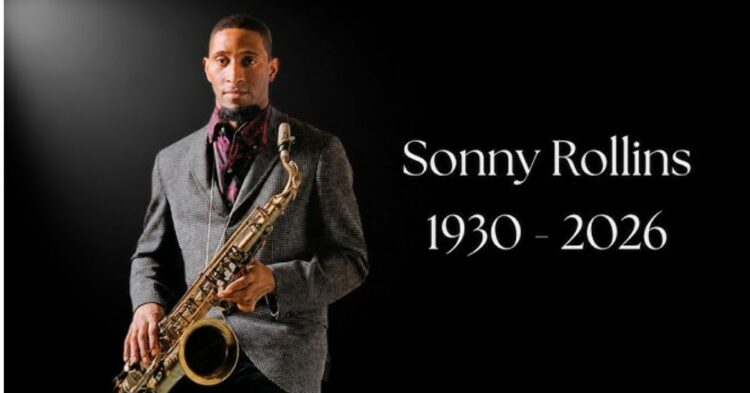
The world of jazz has lost one of its greatest voices. Sonny Rollins, the towering tenor saxophone master widely regarded as one of the greatest improvisers in music history, has died at the age of 95. The news of Sonny Rollins’ death has sent shockwaves across the jazz world, with musicians, critics, and fans remembering the legendary performer whose influence stretched from smoky New York jazz clubs to the halls of the White House.
For decades, Sonny Rollins was celebrated as a revolutionary figure in American jazz. The phrase “Sonny Rollins obituary” quickly began trending as admirers around the globe reflected on the extraordinary life of the saxophone giant whose fearless improvisation changed modern music forever.
Sonny Rollins Was More Than a Jazz Musician
To describe Sonny Rollins simply as a jazz saxophonist would barely scratch the surface. Rollins was an innovator, composer, performer, philosopher, and musical explorer whose work reshaped the language of improvisation.
Fans attending a Sonny Rollins concert knew they were witnessing something unpredictable. Even when he performed familiar classics like St Thomas, Don’t Stop the Carnival, or A Nightingale Sang in Berkeley Square, no two performances were ever the same. That was the magic of Sonny Rollins.
He treated songs not as fixed compositions but as launching pads for spontaneous invention. A melody could suddenly twist into abstract dissonance, return to a recognizable phrase, then explode into roaring saxophone runs that seemed impossible to predict. This fearless creativity made Sonny Rollins one of the most respected improvisers in jazz history.
Early Life of Sonny Rollins
New York City-born Sonny Rollins entered the world as Walter Theodore Rollins. His parents came from the Virgin Islands, and Caribbean music deeply influenced him throughout his life. The calypso rhythms heard in many Sonny Rollins recordings became one of his trademarks.
Growing up in Harlem’s Sugar Hill neighborhood, Rollins was surrounded by music. While his siblings studied classical music, Rollins gravitated toward jazz and blues after being inspired by a saxophone-playing uncle.
Young Sonny Rollins admired jazz legends including Coleman Hawkins, Lester Young, and Charlie Parker. Their influence helped shape his unique sound: powerful, lyrical, adventurous, and emotionally fearless.
Another important influence was Thelonious Monk, Rollins’ friend and mentor. Monk’s unconventional musical thinking encouraged Rollins to challenge musical structures and explore new improvisational territory.
Sonny Rollins and the Rise of Bebop
Sonny Rollins began recording professionally in 1949, working with singer Babs Gonzales. Soon he collaborated with major jazz names including Miles Davis and Thelonious Monk.
The early years were not easy. Rollins struggled with substance abuse, but like Miles Davis, he fought through those battles with discipline and dedication to music.
By the mid-1950s, Sonny Rollins had emerged as one of the most exciting figures in hard bop jazz. His collaboration with trumpeter Clifford Brown and drummer Max Roach became legendary.
Then tragedy struck. Clifford Brown died in a devastating car accident in 1956, a heartbreaking moment that deeply affected Rollins.
The Era of Saxophone Colossus
The late 1950s became the defining period of Sonny Rollins’ career. During these years he recorded several masterpieces that remain essential jazz albums today.
Among them was the legendary Saxophone Colossus. The album cemented Sonny Rollins as a jazz icon and featured classics including St Thomas and the groundbreaking improvisation Blue Seven.
Critics and musicians still regard Blue Seven as one of the greatest improvised jazz performances ever recorded.
Rollins followed with more landmark albums including Way Out West and Newk’s Time.
During this extraordinary creative run, Sonny Rollins composed jazz standards such as Oleo, Doxy, and Airegin, songs that continue to be played by jazz musicians worldwide.
Sonny Rollins and the Williamsburg Bridge
One of the most famous chapters in the Sonny Rollins obituary story involves the Williamsburg Bridge.
At the height of his fame, Rollins unexpectedly disappeared from public performance between 1959 and 1961. Despite widespread success, he remained intensely self-critical and wanted to improve further.
To practice without disturbing neighbors, Sonny Rollins spent hours playing saxophone alone on the Williamsburg Bridge in New York.
When he returned, he released The Bridge, one of the most important recordings of his career. The album symbolized his rebirth as an artist and remains one of the defining works in jazz history.
Sonny Rollins and Global Fame
As jazz evolved through the 1960s and beyond, Sonny Rollins continued pushing boundaries. He experimented with freer musical forms and worked alongside innovative musicians including Ornette Coleman associates Don Cherry and Billy Higgins.
Rollins also became a beloved figure in the United Kingdom, especially at Ronnie Scott’s Jazz Club, where his marathon performances became legendary.
In 1966, Sonny Rollins recorded music for the film Alfie starring Michael Caine.
His eccentric stage presence became part of his legend. Fans adored his unusual hats, spontaneous entrances, and endless ability to transform familiar melodies into thrilling adventures.
Spiritual Journey and Musical Evolution
During the late 1960s, Sonny Rollins stepped away from performing again. This second sabbatical lasted nearly five years.
He traveled through India and Japan studying yoga, meditation, and Buddhist philosophy. These experiences changed him deeply.
When Sonny Rollins returned to music, his style became warmer and more open. He embraced funk, soul, calypso, and romantic ballads while maintaining the improvisational brilliance that defined his career.
Some longtime jazz purists preferred the sharper, more aggressive Sonny Rollins of the 1950s, but his later work attracted an even wider audience.
Sonny Rollins and the Rolling Stones
In one of the most surprising chapters of his career, Sonny Rollins crossed into rock music.
The Rolling Stones drummer Charlie Watts invited Rollins to perform on the band’s song Waiting on a Friend in 1981.
The collaboration introduced Sonny Rollins to mainstream rock audiences and became one of the most memorable saxophone performances in rock history.
Rollins later joked that he once heard the song playing in a supermarket and briefly forgot he was the saxophonist on the recording.
National Honors and White House Recognition
Sonny Rollins received countless honors during his later years. In 2010, then-President Barack Obama awarded him the National Medal of Arts at the White House.
The moment symbolized how far Sonny Rollins had traveled during his remarkable life, from Harlem jazz clubs to America’s highest cultural stage.
A major celebration concert at the Beacon Theatre in New York honored Rollins’ 80th birthday, featuring fellow jazz legends including Ornette Coleman and Roy Haynes.
Later, former President Bill Clinton praised Rollins during the Kennedy Center Honors, saying his music could “bend your mind, break your heart, and make you laugh out loud.”
Final Years and Health Struggles
Sonny Rollins gave his final live performance in 2012 after developing respiratory complications related to pulmonary fibrosis.
Though physically unable to continue playing, Rollins remained deeply connected to music and reflected often on the saxophone masters who inspired him.
In a heartfelt later interview, Sonny Rollins explained that all he ever wanted to do was play music. For nearly 70 years, he did exactly that.
His dedication to the tenor saxophone never faded.
Sonny Rollins’ Legacy Will Never Fade
The death of Sonny Rollins marks the end of one of the greatest chapters in jazz history. Few musicians transformed improvisation as completely as he did.
The influence of Sonny Rollins can be heard across generations of jazz, blues, rock, and experimental music. From Saxophone Colossus to The Bridge, from St Thomas to Blue Seven, his recordings remain timeless monuments to artistic freedom.
For jazz lovers searching for “Sonny Rollins obituary,” the overwhelming feeling is not simply sadness, but gratitude.
Gratitude that Sonny Rollins existed.
Gratitude that his saxophone changed music forever.
And gratitude that one of the greatest improvising geniuses the world has ever known left behind a sound that will continue echoing for generations to come.