Stick to the Facts
Add Nbsla.ca as a Preferred Source on Google to see more of our stories in your search results.

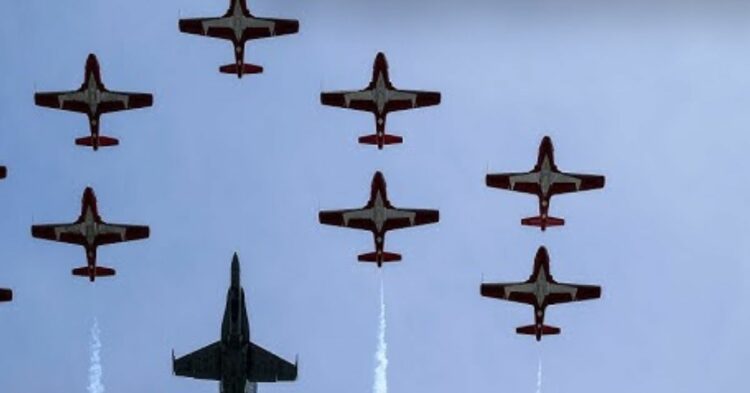
Canada’s legendary Snowbirds aerobatic team is preparing for one of the biggest transitions in its history as the iconic aircraft squadron will be grounded after the 2026 season due to the retirement of the aging CT-114 Tutor fleet. The Royal Canadian Air Force confirmed that the famous demonstration team will eventually return with the new CT-157 Siskin II aircraft, a modern platform based on the Pilatus PC-21 turboprop trainer.
The announcement has sparked emotional reactions across Canada as aviation fans, military supporters, and airshow audiences prepare to say goodbye to the historic Tutor jets that have represented Canadian aviation excellence for more than five decades. The transition from the CT-114 Tutor to the CT-157 Siskin II marks the beginning of a completely new era for the Snowbirds Canada demonstration team.
Snowbirds Canada to End Historic CT-114 Tutor Era After 2026
For more than 55 years, the Snowbirds have become one of the most recognizable aviation symbols in Canada. The aerobatic team has thrilled millions with precision flying demonstrations, airshow appearances, ceremonial flyovers, and international performances.
Now, the RCAF says the aging Tutor aircraft can no longer continue safely beyond the 2026 season.
Lt.-Gen. Jamie Speiser-Blanchet, commander of the Royal Canadian Air Force, described the moment as both emotional and historic because of the extraordinary relationship between the Snowbirds and Canadians.
The decision means the final full Snowbirds 2026 schedule could become one of the most emotional and highly attended airshow seasons in Canadian aviation history as fans rush to see the CT-114 Tutor jets before retirement.
Why the Snowbirds Are Being Grounded
The Snowbirds grounding decision comes after years of engineering and maintenance concerns involving the CT-114 Tutor aircraft fleet.
The federal government previously invested millions to extend the operational life of the Tutor jets. In 2020, Ottawa announced a $30 million investment aimed at keeping the aircraft operational for another decade. However, military officials now say the engineering challenges have accelerated much faster than expected.
Prime Minister Mark Carney explained that the aircraft have effectively reached the end of their safe operational lifespan.
According to officials, replacement parts for the Tutor jets have become increasingly difficult to source because the aircraft design is decades old and no longer supported like modern military training aircraft.
Safety concerns, maintenance complexity, structural fatigue, and rising operational costs ultimately forced the government to retire the fleet earlier than originally planned.
CT-157 Siskin II Aircraft to Replace the Tutor Jets
The future of the Snowbirds Canada team now depends on the arrival of the new CT-157 Siskin II aircraft.
The CT-157 Siskin II is based on the Pilatus PC-21, one of the world’s most advanced turboprop military trainer aircraft. The Pilatus PC-21 has already gained an international reputation for performance, agility, and modern cockpit technology.
The new CT-157 Siskin II aircraft will become the centerpiece of Canada’s next-generation aerial demonstration team.
Unlike the outgoing Tutor jets, the CT-157 Siskin II aircraft will not use traditional jet engines. Instead, the aircraft relies on a powerful turboprop engine design similar to the aircraft currently used by Australia’s military aerobatic team.
Despite concerns from some aviation enthusiasts about losing the dramatic jet roar associated with the Snowbirds, military officials insist the CT-157 Siskin II aircraft will still deliver exciting and high-performance aerial demonstrations.
What Is the Pilatus PC-21?
The Pilatus PC-21 is widely considered one of the most advanced trainer aircraft in the world.
Manufactured by Swiss aerospace company Pilatus Aircraft, the PC-21 combines turboprop efficiency with fighter-style cockpit systems and aerobatic performance capabilities.
The aircraft is already used by several international air forces for advanced pilot training and tactical flight preparation.
The CT-157 Siskin II (Pilatus PC-21) configuration for Canada is expected to include:
- Advanced digital avionics
- Modern cockpit displays
- Improved safety systems
- Greater fuel efficiency
- Reduced maintenance complexity
- Enhanced reliability
- High maneuverability for aerobatic demonstrations
The CT-157 Siskin II aircraft also offers lower operational costs compared to aging jet aircraft, making it a more sustainable long-term platform for the Snowbirds Canada team.
Snowbirds 2026 Schedule Could Become Historic Farewell Tour
The Snowbirds 2026 schedule is now expected to attract enormous public attention as Canadians prepare for the final performances of the CT-114 Tutor era.
Airshows across Canada and the United States are likely to market the 2026 appearances as farewell performances for one of the country’s most iconic military aviation teams.
Many aviation enthusiasts are already calling the upcoming Snowbirds 2026 schedule a “historic farewell tour” for the Tutor jets.
The Snowbirds have performed at:
- Major Canadian airshows
- International aviation festivals
- National ceremonies
- Sporting events
- Military commemorations
- Public celebrations
The final Tutor performances could draw record crowds as fans seek one last opportunity to witness the aircraft in action.
CT-157 Siskin II Name Revives Historic Canadian Aviation Heritage
The name CT-157 Siskin II carries important historical significance for Canadian military aviation.
The original Siskin aircraft served with the Royal Canadian Air Force nearly a century ago, and reviving the name connects the future Snowbirds aircraft with Canada’s historic aviation roots.
Military historians say the CT-157 Siskin II designation represents both modernization and tradition at the same time.
The “II” designation symbolizes the rebirth of the Siskin identity for a completely new generation of Canadian military aviation.
Transition to CT-157 Siskin II Will Take Years
Although the CT-157 Siskin II aircraft has now been selected, the transition will not happen immediately.
Defence Minister David McGuinty confirmed that aircraft production timelines and delivery schedules mean the Snowbirds will likely disappear temporarily after 2026 before eventually returning in the early 2030s.
The federal government says it must coordinate with the manufacturer to ensure gradual aircraft production and delivery.
That means there could be a significant gap between the retirement of the Tutor fleet and the debut of the new CT-157 Siskin II aircraft team.
During this transition period:
- Pilot retraining will occur
- Aircraft testing will take place
- Demonstration maneuvers will be redesigned
- Safety certifications will be completed
- Operational procedures will be updated
Moose Jaw Will Remain Home of the Snowbirds
Even though the aircraft are changing, one important tradition will remain intact.
Moose Jaw, Saskatchewan will continue serving as the home base for the Snowbirds Canada team.
The city has long been connected to the aerobatic squadron and remains central to Canadian military flight training operations.
Keeping Moose Jaw as the team’s headquarters ensures continuity and preserves the deep relationship between the community and the Snowbirds.
Aviation Fans React to CT-157 Siskin II Announcement
Reaction to the CT-157 Siskin II and Pilatus PC-21 transition has been mixed among aviation enthusiasts.
Some fans are excited about the arrival of modern aircraft technology and improved safety systems, while others feel emotional about losing the classic Tutor jets and their unmistakable sound.
Still, many supporters believe preserving the Snowbirds name and mission matters most.
The government has confirmed that although the aircraft are changing, the Snowbirds Canada identity will continue into the future with the CT-157 Siskin II aircraft.
New Era Begins for Snowbirds Canada
The retirement of the CT-114 Tutor marks the end of one of the longest-serving military aerobatic aircraft eras in the world.
But officials insist this is not the end of the Snowbirds. Instead, it is the beginning of a new chapter centered around the CT-157 Siskin II and the Pilatus PC-21 platform.
As the Snowbirds 2026 schedule approaches, Canadians are expected to celebrate both the legacy of the Tutor jets and the future promise of the CT-157 Siskin II aircraft.
The next generation of Snowbirds Canada performances may look and sound different, but the mission of inspiring Canadians through precision aviation and military excellence will continue for decades to come.