Stick to the Facts
Add Nbsla.ca as a Preferred Source on Google to see more of our stories in your search results.

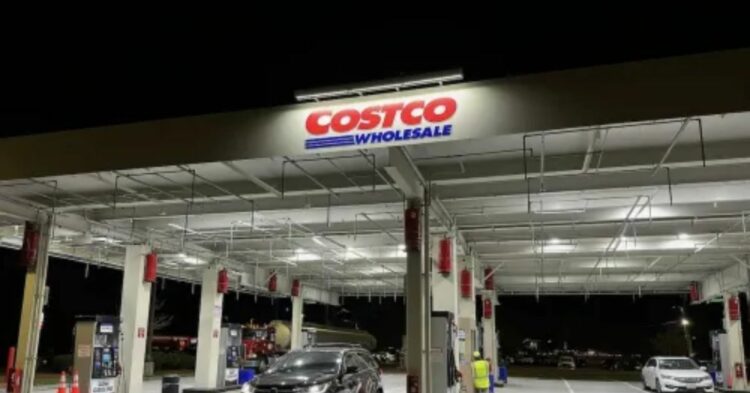
When gas prices stay above $4.50 a gallon, consumer behavior changes fast. Drivers start hunting for cheaper fuel, shifting routines, and rethinking where they shop. One of the clearest winners in this environment has been warehouse retail giant Costco Wholesale Corporation, which is seeing stronger traffic at the pump, stronger store visits, and stronger overall sales as fuel prices remain elevated across the United States.
The situation is simple on the surface: higher gas prices push people to look for savings. But what is happening underneath is more interesting. Fuel savings at Costco are not just helping drivers at the pump. They are pulling more customers into stores, increasing total spending, and strengthening Costco’s position in a cost-sensitive economy.
Rising gas prices are reshaping consumer behavior
The US average price of regular gasoline has stayed above $4 for weeks and recently moved past $4.50 per gallon. That level is enough to change how households plan their weekly spending. Instead of simply filling up wherever is closest, many drivers are now actively searching for cheaper fuel sources, including warehouse clubs and membership-based retailers.
According to survey data from Numerator, more than nine in ten drivers have taken at least one step to reduce fuel costs. These include:
- Driving to cheaper fuel locations
- Using fuel rewards credit cards
- Relying on loyalty apps and programs
- Choosing stations based on price rather than convenience
One of the biggest behavioral shifts is the growing use of club stores for gas. The share of drivers filling up at warehouse clubs increased to around 36%, reflecting how sensitive consumers have become to fuel pricing.
At the same time, fuel rewards usage is also rising, showing that drivers are layering multiple strategies to reduce costs. In short, gas prices above $4.50 are not just an inconvenience. They are actively reshaping where people shop and how they plan travel.
Costco fuel sales are rising as drivers chase savings
For Costco Wholesale Corporation, this shift is showing up clearly in the numbers. The company reported strong US comparable sales growth recently, with a noticeable contribution coming directly from fuel.
Fuel sales alone added multiple percentage points to overall growth, highlighting how important gasoline has become to Costco’s broader retail performance. As gas prices rise, Costco fuel stations become more attractive because they are typically priced lower than traditional gas stations.
This is where the “gas price effect” becomes powerful. Higher fuel prices do not reduce Costco’s attractiveness. Instead, they increase customer traffic.
And that traffic does not stop at the pump.
Fuel traffic is driving in-store spending
One of the most important dynamics in Costco’s model is that gas stations are not isolated profit centers. They act as customer magnets. When drivers stop to fill up, many of them also enter the warehouse store.
Recent foot traffic data from Placer.ai shows that club retailers have been outperforming other retail categories in year-over-year visits. Costco in particular has seen strong increases in store visits alongside fuel demand.
In practical terms, this means:
- More cars at the pump
- More customers walking into stores
- More non-fuel purchases per visit
- Higher overall basket size
Reports also suggest that a large majority of gas customers at newer Costco locations end up shopping in the warehouse on the same trip. In some cases, employees estimate that around 80% of fuel customers also make in-store purchases the same day.
That is a major advantage when gas prices are high. The fuel station becomes a funnel into retail sales.
Costco visits and transactions are climbing
Alongside fuel-driven traffic, Costco is seeing broader gains in customer activity. US store visits have increased, and non-gas transactions are also rising year over year.
That matters because it shows the effect is not limited to fuel. Instead, Costco is benefiting from a dual boost:
- Fuel demand increases visits
- Store visits increase merchandise sales
So even if gas margins are relatively thin, the overall impact on profitability is positive because it drives higher retail volume inside the warehouse.
This pattern reinforces why Costco performs differently from traditional gas stations. Fuel is not the main business. It is the entry point.
Gas prices are forcing consumers to cut spending elsewhere
While drivers are adapting to expensive fuel, they are also cutting back in other areas. Data from the Federal Reserve Bank of New York shows that many households are reducing spending on restaurants, travel, and entertainment to compensate for higher fuel costs.
However, Costco is an exception in this trend.
Instead of cutting Costco spending, many consumers are maintaining or even increasing their membership-based shopping. This reflects the perception that warehouse clubs still offer strong value, even when overall budgets are under pressure.
In other words, consumers are prioritizing essentials and value-driven shopping, and Costco fits both categories.
The K-shaped economy is amplifying Costco’s advantage
Economists often describe the current environment as a K-shaped economy, where higher-income households remain stable or growing while lower-income households face pressure.
This matters for Costco because its customer base tends to lean more affluent and stable compared to many discount retailers. That gives the company more resilience when fuel prices rise sharply.
A key insight from recent economic analysis is that higher-income households continue to purchase gas at steady levels, while lower-income households reduce consumption or shift behavior more aggressively.
This split creates a unique retail environment where warehouse clubs like Costco benefit from both groups:
- Higher-income shoppers maintain spending power
- Cost-conscious shoppers seek fuel savings
- Both groups converge at warehouse fuel stations
That combination strengthens Costco’s traffic and sales even during periods of economic stress.
Why Costco benefits more than traditional retailers
The reason Costco stands out in this gas price environment is structural. Unlike traditional retailers, Costco combines three advantages:
- Low-priced fuel
- High-value bulk retail goods
- Membership-driven loyalty
When gas prices rise above $4.50, those three factors reinforce each other. Drivers come for fuel savings, but they stay for perceived retail value. And once inside, they often spend more than planned.
This creates a cycle where higher fuel prices actually increase overall business activity rather than reduce it.
Final takeaway: gas price chaos is turning into Costco’s advantage
A rising fuel market usually signals pressure for consumers and volatility for retailers. But in this case, the impact is uneven.
Higher gas prices above $4.50 are:
- Driving more traffic to warehouse clubs
- Increasing Costco fuel sales
- Boosting in-store shopping visits
- Strengthening membership-based retail behavior
And at the center of it all is Costco Wholesale Corporation, which continues to convert fuel-driven traffic into broader retail gains.
While many retailers struggle with shifting consumer budgets, Costco is showing how fuel price stress can actually translate into stronger overall performance when the model is built around value, volume, and loyalty.
If gas prices stay elevated, the pattern is likely to continue. More drivers will chase cheaper fuel, and more of them will end up walking out of Costco with a full cart instead of just a full tank.