Stick to the Facts
Add Nbsla.ca as a Preferred Source on Google to see more of our stories in your search results.

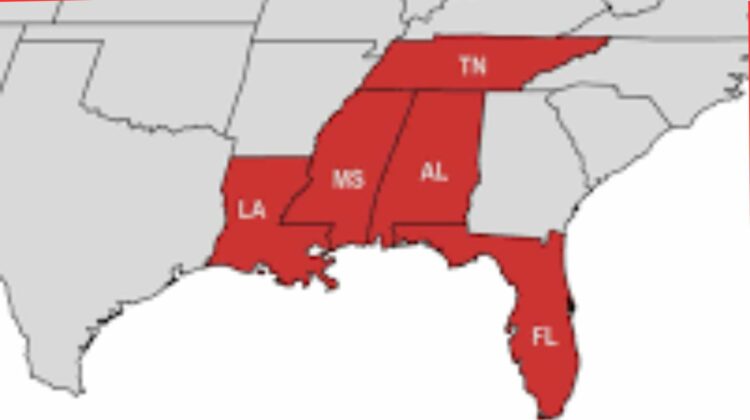
The Deep South 2026 redistricting update has quickly become one of the most consequential political storylines heading into the next U.S. midterm elections. Across southern states, the battle over congressional maps is reshaping electoral strategy, with Republicans gaining ground while Democrats warn that court rulings and new district lines could fundamentally alter the balance of power in Washington.
At the center of the Deep South 2026 redistricting update is a rapidly intensifying struggle over voting maps, court decisions, and political control that could decide control of the U.S. House of Representatives.
Deep South 2026 Redistricting Update: Supreme Court Ruling Shifts the Landscape
A major turning point in the Deep South 2026 redistricting update came after a conservative-majority U.S. Supreme Court ruling that significantly weakened parts of the Voting Rights Act. The decision immediately triggered concerns among Democrats that historically Black-majority districts in southern states could be dismantled or redrawn.
The ruling has opened the door for Republican-led legislatures across the Deep South to revisit congressional maps ahead of the 2026 elections. In practical terms, this means districts that have traditionally supported Democratic candidates may now be at risk of being redrawn in ways that favor Republican candidates.
This development has become a defining feature of the Deep South 2026 redistricting update, as both parties prepare for a legal and political showdown over representation.
Deep South 2026 Redistricting Update: Virginia Court Decision Adds to Democratic Setback
Another major blow in the Deep South 2026 redistricting update came from a separate ruling by the Virginia Supreme Court, which struck down a proposed congressional map that would have given Democrats a potential gain of up to four House seats.
The decision effectively stalled Democratic momentum in the state, removing what had been seen as a key opportunity to strengthen their position in the upcoming elections.
Virginia Democrats, including lawmakers such as Jennifer McClellan and Suhas Subramanyam, have expressed frustration but remain focused on competing under the existing maps. Subramanyam noted that while optimism remains, the new political landscape is significantly more challenging.
The ruling has become a central setback in the broader Deep South 2026 redistricting update, reinforcing Republican advantages in several key states.
Deep South 2026 Redistricting Update: Democrats Respond With Legal and Political Pressure
In response to the setbacks highlighted in the Deep South 2026 redistricting update, Virginia Democrats attempted an emergency legal challenge to the U.S. Supreme Court, seeking approval to move forward with redistricting changes. However, expectations for success remain low, and the current maps are likely to remain in place for the 2026 cycle.
Behind closed doors, some Democratic lawmakers reportedly discussed more aggressive political strategies, including pressure on state legislative processes. However, these ideas have gained little traction, with state leaders signaling limited willingness to pursue extreme institutional changes.
Senator Tim Kaine has publicly acknowledged that time is running out to alter district maps before the election cycle fully accelerates. His comments reflect a growing realization within the party that the Deep South 2026 redistricting update may not be reversible in many states.
Deep South 2026 Redistricting Update: Republicans Move Quickly to Expand Advantage
On the Republican side, the Deep South 2026 redistricting update has triggered swift action in multiple state legislatures. GOP lawmakers are actively pursuing changes that could eliminate or weaken remaining Democratic-leaning districts in states such as South Carolina and Tennessee.
If successful, these efforts could result in a net gain of roughly a dozen Republican-leaning seats nationally, according to political estimates cited in ongoing analysis of the Deep South 2026 redistricting update.
Republicans argue that new maps reflect updated legal interpretations and demographic shifts. Democrats, however, view these moves as aggressive gerrymandering designed to secure long-term electoral advantage before voters head to the polls.
Deep South 2026 Redistricting Update: Key Swing Seats and Political Scandals
While the Deep South 2026 redistricting update continues to evolve, several individual districts are already shaping election forecasts.
In Virginia, two to three congressional seats remain highly competitive. One Republican seat currently drawing attention is held by Jen Kiggans, who has faced political controversy following comments made during a radio interview. The situation has added further volatility to an already tight race.
These developments are being closely monitored as part of the broader Deep South 2026 redistricting update, where even small shifts in voter distribution could determine control of the House.
Deep South 2026 Redistricting Update: Democrats Still See Path to House Majority
Despite setbacks, Democrats argue that the Deep South 2026 redistricting update does not eliminate their path to winning control of the House of Representatives.
Some party strategists believe that broader national issues, including cost-of-living concerns, fuel prices, and political dissatisfaction with former President Donald Trump, could still swing voter sentiment in their favor.
Representative Hakeem Jeffries, who leads House Democrats, remains a central figure in the party’s strategy as they attempt to overcome structural disadvantages created by redistricting changes.
Even with Republican gains in map-drawing efforts, analysts suggest the overall outcome remains uncertain, especially in closely divided districts.
Deep South 2026 Redistricting Update: Maryland and Limited Democratic Opportunities
As part of the Deep South 2026 redistricting update, attention has also turned to Maryland as one of the few remaining Democratic-leaning states with potential to redraw maps.
Governor Wes Moore has expressed support for exploring changes that could reshape the state’s congressional delegation. However, political and procedural constraints mean any such move would require rapid alignment between state officials and lawmakers.
Even if successful, analysts note that Maryland’s impact would be limited compared to the broader Republican-led redistricting efforts across the South.
Deep South 2026 Redistricting Update: Why Small Seat Changes Matter Nationally
One of the most important aspects of the Deep South 2026 redistricting update is how small changes in congressional seats can have outsized national consequences.
In a closely divided House, even a one or two-seat advantage can determine which party controls legislative priorities, committee leadership, and the ability to advance or block major policy initiatives.
This is why both parties are investing heavily in legal challenges, legislative maneuvers, and campaign strategy adjustments tied to the Deep South 2026 redistricting update.
The Deep South 2026 redistricting update continues to reshape the political landscape ahead of the next U.S. midterm elections. With court rulings altering the legal framework and state legislatures aggressively redrawing maps, the battle over congressional districts has become one of the most important factors in determining future control of Congress.
While Republicans currently hold an advantage in the redistricting process, Democrats remain confident that national political conditions and competitive districts will keep the race close.
What is clear from the Deep South 2026 redistricting update is that the fight over maps is no longer a background issue. It is now a central force shaping American political power heading into 2026.