Stick to the Facts
Add Nbsla.ca as a Preferred Source on Google to see more of our stories in your search results.

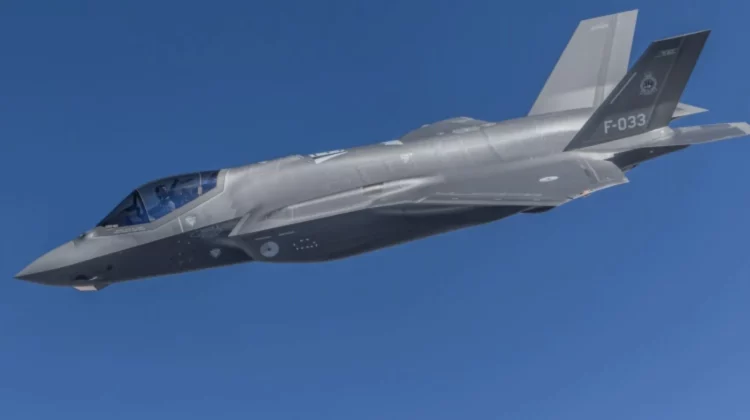
Canada’s long-running effort to modernize its air force has entered a new and uncertain phase. Defence Minister David McGuinty has confirmed that the government is continuing a comprehensive review of its plan to acquire 88 F-35A Lightning II aircraft. The review, originally expected to conclude around September 2025, has stretched well beyond its anticipated timeline, reflecting shifting political priorities, evolving security concerns, and a changing geopolitical environment.
At the heart of the reassessment lies a broader question about Canada’s defence posture and its reliance on the United States. While the F-35 was initially selected as the optimal replacement for Canada’s aging CF-18 Hornet fleet, growing political pressure and public sentiment are pushing policymakers to reconsider whether such deep dependence on U.S. defence systems remains strategically wise.
McGuinty’s remarks suggest a deliberate and cautious approach. Rather than rushing toward a final decision, the government appears intent on evaluating not only the aircraft itself but also the broader implications of the procurement. This includes alliance dynamics, industrial benefits, sovereignty considerations, and long-term operational needs.
The Original F-35 Decision and Its Rationale
Why Canada Chose the F-35 in 2022
In March 2022, Canada formally selected the F-35A as the winner of its Future Fighter Capability Project. The decision followed years of competition and evaluation, with the stealth fighter emerging as the clear leader. The planned acquisition of 88 aircraft carried an estimated cost of $14.2 billion, translating to roughly $161 million per jet when factoring in associated infrastructure, training, and support.
The selection was driven by several key factors. The F-35’s advanced stealth capabilities, sensor fusion, and network-centric warfare design positioned it as one of the most capable fighters in the world. Importantly, it also aligned closely with Canada’s commitments to the North American Aerospace Defense Command (NORAD) and NATO.
Interoperability With the United States
One of the strongest arguments in favor of the F-35 was interoperability. The United States Air Force has made the aircraft a cornerstone of its airpower, particularly in strategically vital regions such as Alaska. Operating the same platform would allow Canada to seamlessly integrate with U.S. forces in joint missions, ensuring faster coordination and enhanced effectiveness in continental defence.
This interoperability is not merely a technical advantage; it is a cornerstone of Canada’s defence strategy. Shared systems, training protocols, and logistics chains significantly reduce operational friction during joint operations. For decades, Canada has relied on close military integration with the United States, and the F-35 was seen as a natural continuation of that partnership.
Changing Political Winds and Strategic Reconsideration
Strained U.S.-Canada Relations
The reassessment of the F-35 program cannot be understood without considering the broader political context. Relations between Canada and the United States experienced a notable downturn beginning in early 2025, prompting Canadian policymakers to rethink the risks of overreliance on a single ally.
Defence procurement, once viewed primarily through a technical and operational lens, is now being reconsidered as a strategic tool. Diversifying suppliers and reducing dependence on U.S. systems has become an increasingly attractive option for some within Canada’s political leadership.
Public Opinion and Sovereignty Concerns
Public sentiment has also played a significant role in shaping the debate. Many Canadians have expressed concern about the implications of tying the country’s air defence capabilities so closely to U.S. technology and supply chains. Questions about sovereignty, data control, and operational independence have gained prominence.
The F-35 program, while technologically advanced, is deeply integrated into a U.S.-led ecosystem. This includes software updates, maintenance infrastructure, and mission data systems that are largely controlled by American entities. For critics, this raises legitimate concerns about autonomy in times of political disagreement.
Financial Commitments and Practical Constraints
Investments Already Made
Despite the ongoing review, Canada has already made substantial financial commitments to the F-35 program. Payments have been completed for the first 16 aircraft, and additional funds have been allocated for long-lead components associated with 14 more jets.
These investments complicate the possibility of a full cancellation. Even if Canada decides to scale back its order, it is unlikely to abandon the program entirely without incurring significant financial penalties and operational setbacks.
A Reduced Fleet as a Likely Outcome
One plausible outcome of the review is a reduced procurement. Instead of acquiring the full 88 aircraft, Canada could opt for a smaller fleet, potentially around 30 fighters. This would allow the country to maintain a degree of interoperability with the United States while leaving room to explore alternative platforms.
Such a hybrid approach would represent a compromise between operational necessity and strategic diversification. However, it would also introduce new challenges, including increased complexity in training, maintenance, and logistics.
The Gripen Alternative: A Contender Revisited
Renewed Talks With Saab
As part of its reassessment, Canada has revisited discussions with Saab regarding the Saab JAS 39 Gripen E/F. The Swedish-built fighter has long been promoted as a cost-effective and flexible alternative to the F-35, with an emphasis on operational independence and lower lifecycle costs.
The Gripen’s appeal lies in its modular design and its ability to operate from dispersed bases, making it well-suited for countries with large territories and limited infrastructure. Saab has also emphasized the potential for industrial partnerships and domestic production, which could benefit Canada’s aerospace sector.
Performance Gaps Revealed in Evaluation
However, internal evaluations have painted a stark picture. Under the Future Fighter Capability Project tender, the F-35 significantly outperformed the Gripen. Scoring over 95 percent compared to the Gripen’s 33 percent, the difference was particularly pronounced in operational effectiveness.
These results underscore the technological gap between fifth-generation fighters like the F-35 and advanced fourth-generation platforms such as the Gripen. While the Gripen offers affordability and flexibility, it lacks the stealth and sensor integration capabilities that define modern air combat.
The Fifth-Generation Imperative
Evolving Threat Landscape
Senior Canadian military officials have consistently emphasized the importance of maintaining parity with emerging global threats. Countries such as China and Russia are fielding their own fifth-generation fighters, raising the stakes for Western air forces.
Aircraft like the F-35 are designed specifically to counter these threats, leveraging stealth, advanced sensors, and data fusion to operate effectively in contested environments. For many defence planners, these capabilities are no longer optional but essential.
NATO Compatibility and Strategic Alignment
Another critical factor is NATO compatibility. The F-35 remains the only fifth-generation fighter currently in production that is fully integrated within NATO frameworks. This gives it a unique advantage in coalition operations, where seamless communication and coordination are vital.
Choosing an alternative platform could complicate Canada’s role within NATO, potentially limiting its ability to participate in high-end joint operations. This consideration weighs heavily in favor of maintaining at least a partial F-35 fleet.
Looking Ahead: The Global Combat Air Programme
A Next-Generation Opportunity
In April 2026, a new possibility emerged with discussions حول Canada potentially joining the Global Combat Air Programme. This ambitious project, led by the United Kingdom, Japan, and Italy, aims to develop a next-generation fighter by 2035.
The program represents a long-term investment in future capabilities, potentially offering an alternative to both the F-35 and existing European fighters. For Canada, participation could provide access to cutting-edge technology while diversifying its defence partnerships.
Uncertainty Around Capabilities
However, the GCAP initiative is not without its uncertainties. Questions remain about whether it can deliver a platform comparable to the latest Block 4 upgrades of the F-35. Development timelines, cost overruns, and technological risks are all factors that must be carefully considered.
Even so, the program is widely expected to surpass current fourth-generation fighters in capability, making it a potentially attractive option for long-term planning.
Balancing Independence and Capability
The Core Dilemma
Canada’s fighter procurement review ultimately reflects a broader dilemma. On one hand, the F-35 offers unmatched capability and interoperability with key allies. On the other, it reinforces dependence on the United States at a time when political relations are less predictable.
Finding the right balance between these competing priorities is no easy task. Any decision will have far-reaching implications for Canada’s military effectiveness, industrial base, and international relationships.
A Decision With Long-Term Consequences
Fighter aircraft are not short-term investments. They remain in service for decades, shaping a nation’s defence posture for a generation or more. As such, the stakes of Canada’s decision extend well beyond immediate political considerations.
Whether Canada ultimately proceeds with the F-35, reduces its order, or pivots toward alternative solutions, the outcome will define the future of the Royal Canadian Air Force and its role on the global stage.
Conclusion: A Defining Moment for Canadian Defence Policy
Canada’s ongoing review of its fighter jet procurement is more than a routine reassessment. It is a reflection of deeper questions about national identity, strategic autonomy, and the nature of modern warfare.
The F-35A Lightning II remains the benchmark against which all alternatives are measured, but it is no longer the uncontested choice it once appeared to be. As political, technological, and strategic factors continue to evolve, Canada finds itself at a निर्णायक crossroads.