Stick to the Facts
Add Nbsla.ca as a Preferred Source on Google to see more of our stories in your search results.

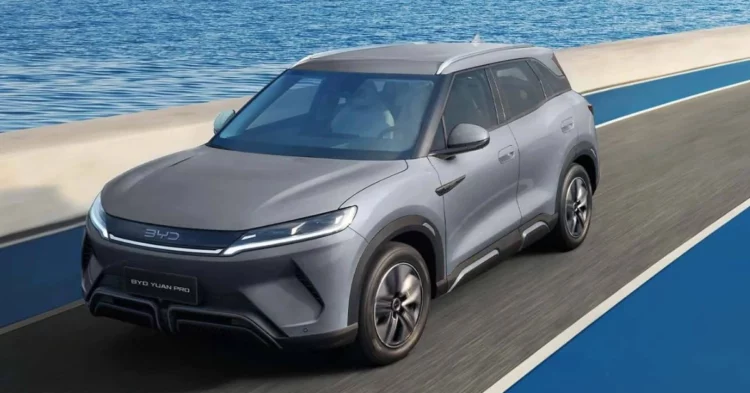
Canada’s decision to open its market to Chinese-built electric vehicles has created an unexpected ripple effect far beyond pricing and consumer choice. It has introduced a practical and increasingly important question for drivers who regularly cross into the United States: whether owning a Chinese-built EV could complicate travel at the border.
For many Canadians, this is not a theoretical concern. Cross-border driving remains a major part of daily life, tourism, shopping, and family visits. Even after fluctuations in travel patterns driven by trade tensions and shifting public sentiment, millions of land crossings still occur each year. In 2024 alone, roughly 30 million land trips were recorded, before dropping to around 19 million the following year. Projections suggest that 2026 may remain close to that lower level, still representing nearly 20 million crossings.
Against this backdrop, the idea that a vehicle’s country of manufacture could influence border experience is more than political speculation. It directly affects consumer decisions.
Canada’s New EV Import Framework: Opening the Door to Chinese-Built Vehicles
A controlled but significant market opening
Canada has introduced a structured system that allows up to 49,000 Chinese-built electric vehicles annually into the domestic market. The system, announced in January and implemented through a permit-based process starting March 1, initially allocates 24,500 permits through August 31. Over time, the annual cap could rise to approximately 70,000 vehicles within five years.
This marks a meaningful shift in Canada’s automotive trade policy. While Chinese EVs were previously restricted or heavily discouraged, they are now expected to become increasingly available to consumers across Canadian provinces.
Why Canadian consumers are interested
The appeal of Chinese-built EVs is straightforward. Many models offer:
Lower purchase prices compared to North American or European competitors
Competitive driving range and fast-charging capabilities
Advanced in-vehicle technology and software features
A wider range of entry-level EV options at a time when affordability is a concern
In a market where electric vehicles often carry high price premiums, these factors are significant enough to influence purchasing decisions.
However, affordability is only one part of ownership. The more complex issue is cross-border compatibility, especially given Canada’s proximity to the United States.
The U.S. Position on Chinese EVs: Security First, Trade Second
High tariffs and tighter restrictions
The United States has taken a far more restrictive approach toward Chinese electric vehicles. In May 2024, Washington imposed a 100 percent tariff on Chinese EV imports, effectively shutting them out of the American market.
Canada followed a similar path shortly afterward but later adjusted its stance by introducing a controlled import framework. The United States, by contrast, has maintained a firm position.
National security concerns over connected vehicles
A major factor driving U.S. policy is concern over vehicle software and data systems. Modern EVs are not just mechanical transport tools; they are connected digital platforms. They can collect and transmit:
Location data
Driving behavior patterns
Passenger information
Environmental and infrastructure data
U.S. regulators have argued that such systems could pose national security risks if they are linked to foreign-controlled technology ecosystems.
As a result, rules finalized in early 2025 under the Biden administration introduced restrictions targeting Chinese-connected vehicle hardware and software on U.S. roads. These measures have remained in place under the subsequent administration, with officials signaling that no immediate changes are planned.
The Key Uncertainty: Can Canadian Owners Bring Chinese EVs Into the U.S.?
Ownership versus importation: a critical distinction
The central confusion for Canadian consumers is the difference between importing a vehicle into the United States permanently and temporarily driving a foreign-registered vehicle across the border.
Permanent importation is heavily regulated. It involves compliance with U.S. Environmental Protection Agency standards, Department of Transportation safety rules, and additional scrutiny for restricted technologies.
Temporary entry is different. It applies to tourists and short-term visitors, including Canadians, who bring their own vehicles into the United States for personal use.
The question was whether Chinese-built EVs would be treated differently at the border under temporary entry rules.
Why the uncertainty existed
The uncertainty stemmed from the overlap between trade restrictions and border mobility. Even if a vehicle is legally sold and registered in Canada, its Chinese manufacturing origin and software systems raised questions about whether U.S. border authorities might impose additional scrutiny or restrictions.
For Canadians who frequently travel to the United States by car, this uncertainty could influence purchasing decisions, especially for EV buyers considering Chinese brands.
What U.S. Customs and Border Protection Clarified
Initial ambiguity in official responses
When asked for clarification, U.S. Customs and Border Protection initially provided general guidance about vehicle entry rules without directly addressing Chinese-built EVs.
The response focused on standard requirements such as documentation, registration, insurance, and emissions compliance, but did not clearly resolve whether country of manufacture would matter.
Final clarification from CBP
A subsequent response from CBP provided a more definitive explanation.
A spokesperson confirmed that:
U.S. Customs and Border Protection allows temporary entry of foreign-registered vehicles for personal use by non-residents, including Canadian citizens.
Canadian citizens with proper documentation can generally cross into the United States in a street-legal, Canadian-registered and insured vehicle.
The country of manufacture does not determine eligibility for temporary entry.
The key considerations are purpose of visit, duration of stay, documentation, and compliance with safety and emissions standards.
Importantly, CBP emphasized the distinction between temporary entry and permanent importation. The stricter rules tied to national security concerns apply to vehicles being brought into the U.S. market permanently, not to short-term cross-border travel.
What This Means for Canadian EV Buyers
Chinese EV ownership does not block U.S. road trips
For Canadians who purchase Chinese-built EVs legally sold and registered in Canada, the practical takeaway is straightforward. These vehicles can be driven into the United States for temporary visits under normal conditions.
This includes common travel purposes such as:
Visiting family and friends
Tourism and leisure travel
Short shopping trips or events
Business-related travel not involving relocation
As long as the vehicle is properly registered in Canada, insured, and meets standard road safety requirements, it is treated similarly to other foreign-registered vehicles at the border.
Where problems could still arise
While general entry is permitted, there are still practical considerations that EV owners should be aware of:
Software or connectivity systems that may not function fully across borders
Charging infrastructure differences depending on region and compatibility standards
Potential future regulatory changes in U.S. policy regarding connected vehicles
Increased inspection or questioning at border crossings in politically sensitive periods
These are not prohibitions, but rather evolving risks tied to rapidly changing technology policy.
The Bigger Picture: EVs, Trade Tensions, and Mobility Rights
Cars as political objects
Electric vehicles have become more than consumer products. They sit at the intersection of climate policy, industrial strategy, data security, and international trade disputes.
China’s rise in EV manufacturing has created global tension, especially with North American and European automakers facing increased competition. In response, governments have introduced tariffs, incentives, and regulatory barriers that directly shape consumer choices.
Canada’s balancing act
Canada finds itself in a middle position. On one hand, it is opening its market to lower-cost EV imports to improve affordability and accelerate electrification. On the other hand, it remains closely integrated with U.S. trade and security frameworks.
This creates a situation where Canadian consumers may legally purchase vehicles that are politically sensitive in the United States, even though everyday cross-border travel remains largely unaffected.
Conclusion: Cross-Border Travel Remains Open, But Policy Risks Are Real
At present, Canadians who buy Chinese-built electric vehicles can still expect to cross into the United States without special restrictions, provided their vehicles are legally registered, insured, and used for temporary personal travel.
U.S. Customs and Border Protection has confirmed that country of manufacture is not a barrier for temporary entry of Canadian-registered vehicles.
However, the broader policy environment remains unsettled. Trade restrictions, data security concerns, and evolving EV regulations mean that future changes cannot be ruled out. For Canadian buyers who regularly travel south of the border, this makes Chinese EV ownership not just a financial decision, but one that sits within a shifting geopolitical landscape.