Stick to the Facts
Add Nbsla.ca as a Preferred Source on Google to see more of our stories in your search results.

For decades, Spirit Airlines occupied a unique position in the American aviation industry. It was rarely praised for luxury, customer service, or onboard amenities, yet it played a powerful role in making air travel affordable for millions of travelers. Even as passengers frequently complained about extra fees, cramped seating, and limited comforts, the ultra-low-cost carrier consistently forced competitors to lower prices.
That impact became even more apparent after Spirit Airlines ceased operations on May 2, 2026, following a failed Chapter 11 restructuring effort. The airline’s shutdown marked the end of a 33-year journey that transformed budget air travel in the United States.
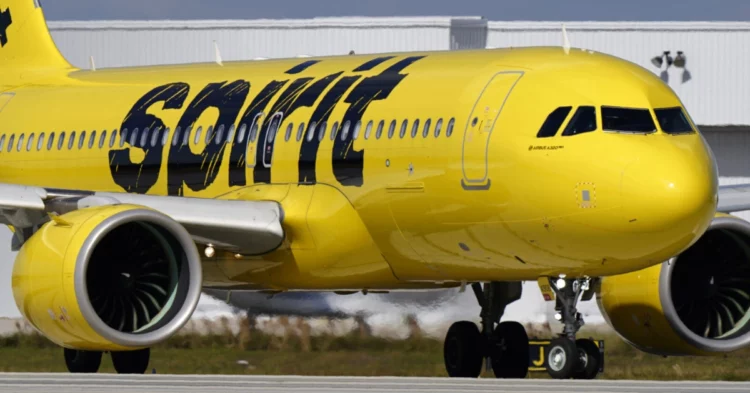
Now, just weeks after closing its doors, Spirit Airlines may have found an unexpected path toward revival. A Texas-based company has submitted a proposal to acquire the airline’s brand and remaining assets, potentially giving the famous yellow carrier a second chance.
Spirit Airlines Ranked Lowest in Customer Satisfaction
Spirit Airlines’ final years were marked by significant customer dissatisfaction. According to the 2026 American Customer Satisfaction Index (ACSI), the airline received a score of 66 out of 100, making it the lowest-rated airline in the survey.
The score placed Spirit behind fellow budget carrier Frontier Airlines and significantly below industry leader Delta Air Lines, which earned the highest ranking among major U.S. airlines.
The low rating reflected years of criticism surrounding Spirit’s business model. Passengers often faced additional charges for services that many traditional airlines included in the base fare. Fees for checked baggage, carry-on luggage, seat selection, snacks, beverages, and other amenities frequently increased the final cost of travel beyond the advertised ticket price.
While customers consistently voiced frustration about the airline’s fee structure, many still booked flights because of one simple factor: affordability.
Why Travelers Continued Flying Spirit Despite Complaints
The airline’s popularity was never based on luxury or comfort. Instead, it appealed to travelers who prioritized cost savings above all else.
For many passengers, Spirit represented an opportunity to travel that might otherwise have been financially out of reach. Weekend getaways, family visits, and last-minute trips often became possible because Spirit offered fares significantly lower than those of larger competitors.
Travelers who understood the airline’s no-frills approach frequently accepted the trade-offs. While the flying experience could be uncomfortable compared to premium carriers, the savings often justified the inconvenience.
This reality explains why Spirit maintained a loyal customer base despite consistently receiving poor satisfaction scores.
The “Spirit Effect” That Changed Airline Pricing
One of the strongest arguments in favor of Spirit Airlines was its influence on airfare pricing across the entire industry.
The U.S. Department of Justice highlighted this impact during legal proceedings related to the proposed JetBlue acquisition of Spirit. Government officials argued that Spirit played a critical role in increasing competition and reducing ticket prices.
The phenomenon became known throughout the aviation industry as the “Spirit Effect.”
How Spirit Forced Competitors to Lower Prices
According to court filings and industry analyses, average airfares often dropped substantially whenever Spirit entered a new market.
Spirit estimated that average ticket prices fell by approximately 17% when the airline began operating on a route. Meanwhile, JetBlue estimated that fares could increase by as much as 30% when Spirit exited a market.
The reasoning was straightforward. Spirit’s ultra-low-cost model forced competing airlines to adjust their pricing strategies in order to remain competitive.
Even travelers who never flew Spirit benefited from its presence because other carriers frequently lowered fares to avoid losing customers.
This competitive pressure helped keep airfare prices in check across dozens of domestic routes.
The Hidden Value of Ultra-Low-Cost Carriers
Many aviation analysts argue that Spirit’s greatest contribution was not the service it provided directly but the pressure it placed on larger airlines.
Traditional carriers often criticized Spirit’s operating model, yet they were forced to respond whenever the airline entered a market. Promotional fares, discounted ticket sales, and more competitive pricing often followed Spirit’s arrival.
As a result, millions of travelers enjoyed lower airfares regardless of which airline they ultimately chose.
The carrier effectively acted as a market disruptor, reshaping pricing strategies throughout the industry.
The Failed JetBlue Merger That Changed Everything
The beginning of Spirit Airlines’ downfall can be traced back to a major legal decision in early 2024.
JetBlue Airways had proposed acquiring Spirit Airlines in a deal valued at approximately $3.8 billion. The merger was positioned as a way to strengthen JetBlue’s competitive position against larger carriers while providing Spirit with financial stability.
However, federal regulators viewed the transaction differently.
Government Concerns About Reduced Competition
In January 2024, U.S. District Judge William Young blocked the proposed merger.
Regulators argued that eliminating Spirit from the marketplace would reduce competition and ultimately lead to higher fares for consumers.
The government’s position centered on Spirit’s unique role as a disruptive low-cost airline. Officials believed that removing Spirit would weaken competitive pricing pressure and reduce affordable travel options for consumers.
The court ultimately agreed with those concerns, preventing the merger from moving forward.
Why the Decision Hurt Spirit Airlines
While regulators viewed the ruling as a victory for competition, the outcome proved devastating for Spirit Airlines.
The company had hoped the acquisition would provide a financial lifeline and help address mounting operational and financial challenges.
Without the merger, Spirit faced increasing debt obligations, rising operating costs, and ongoing profitability concerns.
The blocked deal left the airline with limited options for long-term survival.
Spirit Airlines’ Bankruptcy Journey
The financial pressures facing Spirit Airlines eventually led the company into bankruptcy protection.
What followed was a complicated restructuring effort that initially appeared promising but ultimately failed.
November 2024: Chapter 11 Filing
On November 18, 2024, Spirit Airlines filed for Chapter 11 bankruptcy protection in the U.S. Bankruptcy Court for the Southern District of New York.
The airline emphasized that flights would continue operating normally while it reorganized its finances.
At the same time, Spirit announced a restructuring agreement designed to reduce debt and improve its balance sheet.
Financial Restructuring Plan
The restructuring plan included several significant measures:
Debt totaling approximately $795 million would be converted into equity ownership.
A new equity investment worth $350 million would be injected into the company.
An additional $840 million in senior secured debt financing would provide operational support.
Initially, the strategy appeared to offer a viable path forward.
Bankruptcy Court Approval
The court quickly approved Spirit’s initial bankruptcy motions, allowing the airline to continue normal operations.
Employees continued receiving paychecks, customers retained access to loyalty programs, and flights remained available for booking.
This stability helped reassure travelers and investors during the early stages of the restructuring process.
Emergence From Bankruptcy
In February 2025, the bankruptcy court confirmed Spirit’s reorganization plan.
By March 2025, the airline officially emerged from Chapter 11 protection.
Many observers viewed the development as a positive sign that Spirit had successfully overcome its financial challenges.
Unfortunately, the recovery would prove temporary.
Spirit’s Second Bankruptcy Filing
Just months after emerging from bankruptcy, Spirit’s financial situation deteriorated once again.
In August 2025, parent company Spirit Aviation Holdings filed for Chapter 11 bankruptcy protection for a second time in less than a year.
The repeat filing highlighted the severity of the airline’s financial struggles.
Why the Airline Could Not Recover
Several factors contributed to Spirit’s inability to achieve sustainable profitability.
Higher operating costs continued to pressure margins.
Intense competition limited pricing flexibility.
Debt obligations remained significant despite restructuring efforts.
Consumer demand patterns shifted in ways that made profitability increasingly difficult for ultra-low-cost carriers.
Together, these challenges created an environment that proved impossible for Spirit to overcome.
Spirit Airlines Shuts Down After 33 Years
On May 2, 2026, Spirit Airlines announced an immediate and orderly wind-down of operations.
The decision marked the official end of passenger service after more than three decades in business.
For many travelers, the announcement represented more than the loss of a single airline. It signaled the disappearance of one of the industry’s most aggressive fare competitors.
Asset Sales Begin
Following the shutdown, Spirit began liquidating valuable assets.
Among the assets prepared for auction were:
Airport slots at key locations including New York’s LaGuardia Airport.
The airline’s loyalty rewards program.
Operational equipment and infrastructure.
Corporate real estate holdings.
These sales were designed to maximize value for creditors during the liquidation process.
A Potential Lifeline Appears
Despite the liquidation process already underway, a surprising development has emerged.
Texas-based Mooney International has submitted a proposal to acquire Spirit Airlines and certain related assets.
The proposal has generated new speculation about whether the airline brand could survive.
What Mooney International Wants to Do
According to company statements, the acquisition proposal would combine operations involving Spirit Airlines, Mooney International, and SEAir.
The company says the goal is to preserve the Spirit brand while building a stronger and more customer-focused airline.
Executives described plans centered on operational excellence, expanded route networks, enhanced passenger experiences, and long-term growth opportunities.
The proposal also includes commitments toward affordable air travel and sustainable aviation initiatives.
Bankruptcy Court Approval Remains Necessary
The offer is not yet finalized.
Because Spirit remains under bankruptcy court supervision, any acquisition would require approval from the U.S. Bankruptcy Court for the Southern District of New York.
Court officials will evaluate the proposal alongside the interests of creditors and stakeholders before any final decision is made.
As a result, Spirit’s future remains uncertain.
Airfare Prices Rise After Spirit’s Exit
Industry data suggests that Spirit’s disappearance has already begun affecting ticket prices.
Analyses of airline schedules and fare information indicate that routes previously served by Spirit have experienced noticeable fare increases.
Fewer Seats Mean Higher Prices
Aviation experts note that when any airline leaves a market, the overall supply of available seats decreases.
With fewer seats available, airlines often gain greater pricing power.
As a result, consumers frequently face higher ticket costs.
Industry analysts found that average fares increased approximately 14% across numerous routes Spirit exited between 2024 and 2025.
For travelers already struggling with inflation and higher travel expenses, these increases can significantly affect vacation planning and business travel budgets.
Why Many Travelers Miss Spirit Airlines
Despite years of criticism and poor customer satisfaction rankings, many travelers now recognize the value Spirit provided.
The airline was never intended to offer luxury. Instead, it focused on delivering the lowest possible fare.
For budget-conscious consumers, that mission mattered.
Spirit enabled spontaneous trips, affordable vacations, and travel opportunities that larger airlines often priced out of reach.
Its absence has reminded consumers that low-cost competition plays an essential role in keeping airfare affordable.
Could Spirit Airlines Make a Comeback?
The possibility of a Spirit Airlines revival remains uncertain but no longer impossible.
Mooney International’s proposal represents the first serious effort to preserve the airline’s brand following its shutdown.
If approved, the acquisition could breathe new life into a company that many industry observers believed was gone forever.
Whether Spirit ultimately returns to the skies or remains a chapter in aviation history, its impact on the airline industry is undeniable.