Stick to the Facts
Add Nbsla.ca as a Preferred Source on Google to see more of our stories in your search results.

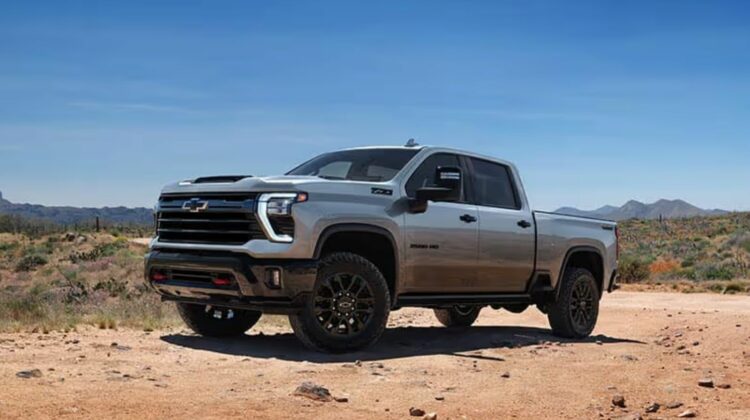
The decision to discontinue the Chevrolet Silverado medium-duty lineup has sent a clear signal through the commercial vehicle industry. The move affects the Chevrolet Silverado 4500HD, Silverado 5500HD, and Silverado 6500HD, marking a major shift in how General Motors approaches the work truck segment.
At the center of this change is General Motors, which has chosen not to renew its production agreement with International Trucks. As a result, production of these heavy-duty Silverado trucks will officially end this fall, reshaping both the medium-duty truck market and GM’s commercial strategy.
Chevrolet Silverado Medium-Duty Trucks Discontinued After Production Agreement Ends
The Chevrolet Silverado 4500HD, 5500HD, and 6500HD were purpose-built commercial trucks designed for serious workload applications. These models were not consumer pickups but dedicated work vehicles used in:
- Fleet operations
- Construction and towing businesses
- Utility and infrastructure services
- Heavy-duty transport applications
Built in partnership with International Trucks, the Silverado MD lineup was assembled at the Springfield, Ohio facility. However, once General Motors decided not to renew its agreement, the entire production structure collapsed.
Production is now scheduled to end on September 30, with earlier shutdowns affecting related International models built at the same facility. The plant itself has already changed ownership, reflecting the broader fallout from GM’s exit.
Inside the Chevrolet Silverado 4500HD, 5500HD, 6500HD Platform
The Chevrolet Silverado medium-duty lineup was engineered to handle demanding commercial workloads.
All three models were powered by a Duramax 6.6-liter turbodiesel V8, producing around 350 horsepower and 750 lb-ft of torque. Power delivery was managed through an Allison six-speed automatic transmission, widely respected in commercial trucking for durability and load handling.
Key specifications across the lineup included:
- Silverado 4500HD: 14,001–16,500 lbs GVWR
- Silverado 5500HD: up to 19,500 lbs GVWR
- Silverado 6500HD: up to 23,500 lbs GVWR
Buyers could also choose multiple configurations, including:
- Regular cab
- Double cab
- Crew cab
- Multiple wheelbase options ranging from 165 to 243 inches
- Available four-wheel-drive setups
On paper, the Chevrolet Silverado HD trucks were competitive in the medium-duty segment. But real-world demand told a different story.
Silverado Truck Sales Decline Puts Pressure on GM Strategy
Sales performance played a major role in the decision to discontinue the lineup. The Chevrolet Silverado medium-duty trucks recorded just 1,273 units sold in Q1 2026, representing a 37.4% drop year over year.
That decline becomes more significant when compared to competitors. During the same period, Ford Motor Company sold 2,331 units of its F-650 and F-750 medium-duty trucks, widening the gap in a critical commercial segment.
Even though medium-duty trucks operate in lower volumes than consumer pickups, sustained declines in a niche market quickly impact profitability, especially when production depends on external partnerships and shared manufacturing facilities.
For GM, the numbers likely made continuation difficult to justify.
Chevrolet Silverado Exit Triggers Plant Shutdown and Industry Ripple Effects
The end of the Silverado 4500HD, 5500HD, and 6500HD production has had consequences beyond GM itself.
The Springfield, Ohio plant where the trucks were built was originally operated in partnership with International Trucks. With GM exiting the agreement, production of International’s CV Series also began winding down, with shutdown timelines accelerating shortly after GM’s announcement.
Eventually, the facility was sold to Canadian defense contractor Roshel Inc., marking a complete transformation of the site’s industrial purpose.
This chain reaction highlights how deeply interconnected modern vehicle manufacturing has become. A single contract ending can reshape entire factories, supplier networks, and workforce structures.
Why Chevrolet Silverado Medium-Duty Trucks Struggled
Despite strong specifications, the Chevrolet Silverado HD trucks faced several structural challenges:
1. Limited Market Size
Medium-duty trucks are inherently niche products. Demand is stable but not large enough to sustain multiple overlapping platforms.
2. High Development and Manufacturing Costs
Dependence on external production partners reduced flexibility and increased vulnerability to contract changes.
3. Strong Competition from Ford
Ford Motor Company maintained a stronger foothold in the medium-duty segment, consistently outperforming Silverado MD sales.
4. Shift in Fleet Purchasing Behavior
Fleet buyers increasingly prioritize total cost of ownership over brand identity, reducing the advantage of Chevrolet branding.
These pressures combined to create a market environment where even capable trucks like the Silverado MD lineup struggled to maintain long-term viability.
Chevrolet Silverado Strategy Shift Toward Isuzu-Based Trucks
The discontinuation of the Silverado 4500HD, 5500HD, and 6500HD does not mean GM is leaving the commercial truck space entirely.
Instead, the company is shifting focus toward its Chevrolet Low Cab Forward (LCF) lineup, which is based on partnerships with Isuzu Motors.
These include:
- LCF 3500
- LCF 4500
- LCF 5500
- LCF 6500XD
- LCF 7500XD
These models are essentially rebadged or jointly developed Isuzu commercial trucks, offering GM a lower-risk, lower-cost way to remain in the segment without maintaining a full independent medium-duty platform.
For fleet operators, this shift may not be dramatic, since reliability and uptime matter more than branding. But strategically, it represents a clear retreat from Silverado-branded medium-duty development.
Silverado Truck Exit Reflects Bigger Industry Shift
The end of the Chevrolet Silverado medium-duty truck lineup reflects a broader transformation in the automotive industry.
Two trends stand out:
1. Consumer Trucks Are Getting Bigger, Not Work-Focused
Light-duty pickups are becoming more luxury-oriented, leaving true commercial work to specialized fleets.
2. Medium-Duty Segment Is Shrinking in Viability
Rising production costs and uneven demand make it harder for automakers to justify dedicated platforms.
In this environment, even established models like the Silverado 5500HD and 6500HD are not guaranteed survival unless they generate strong, consistent returns.
What the Chevrolet Silverado Discontinuation Means Going Forward
The removal of the Chevrolet Silverado 4500HD, 5500HD, and 6500HD raises a broader question about the future of specialized commercial vehicles.
If a major manufacturer like General Motors decides the segment no longer makes financial sense, it suggests that other niche truck programs could also be vulnerable.
The industry is now left with an uncomfortable reality: fewer dedicated medium-duty options and increasing reliance on a smaller group of global platforms.
The discontinuation of the Chevrolet Silverado medium-duty lineup is more than just a product update. It represents a structural shift in how automakers approach commercial trucking.
With rising costs, shrinking margins, and intensifying competition from players like Ford Motor Company, the decision by General Motors to exit the segment underscores how quickly priorities are changing.
The legacy of the Silverado 4500HD, 5500HD, and 6500HD will remain as capable work trucks, but their disappearance signals something bigger: the medium-duty truck market is no longer guaranteed space for everyone.