Stick to the Facts
Add Nbsla.ca as a Preferred Source on Google to see more of our stories in your search results.

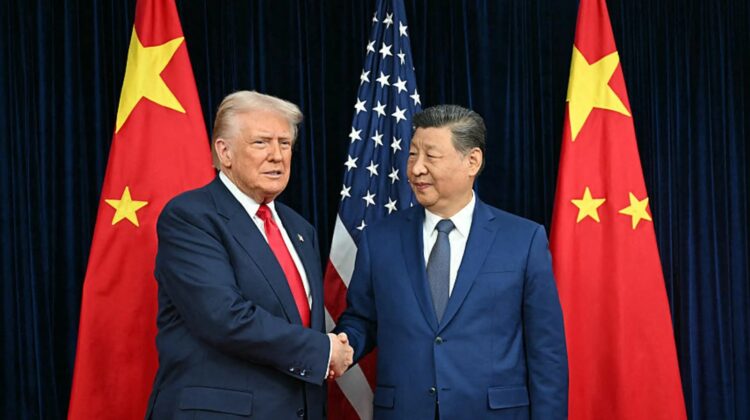
The latest Trump China visit has triggered worldwide attention as President Donald Trump met Chinese leader Xi Jinping in Beijing for one of the most closely watched diplomatic summits in years.
Held inside the iconic Great Hall of the People, the meeting between President Xi and President Trump immediately revived discussions surrounding the famous geopolitical theory known as the Thucydides Trap. Analysts, historians, and publications including The New York Times have increasingly linked the growing US-China rivalry to this theory, which warns about the danger of conflict when a rising power challenges an existing global superpower.
As tensions surrounding Taiwan, trade, military competition, artificial intelligence, energy security, and global influence continue to grow, the Trump in China summit has become far more than a symbolic diplomatic visit. Many experts believe it represents a defining moment in the future relationship between the world’s two most powerful nations.
What Is the Thucydides Trap and Why Does It Matter in US-China Relations?
The phrase Thucydides Trap comes from the ancient Greek historian Thucydides, who wrote about the Peloponnesian War between Athens and Sparta. The concept was later popularized by political scientist Graham Allison to describe what happens when a rising power threatens to displace an established one.
Today, many observers see the rivalry between the United States and China through the lens of the Thucydides Trap.
In this interpretation:
- China represents the rapidly rising power
- The United States remains the dominant global superpower
- Competition between the two creates risks of confrontation
The recent Trump China visit to Beijing has intensified conversations about whether both nations can avoid the historical pattern of conflict associated with the Thucydides Trap.
Xi Jinping and President Trump Hold Historic Summit in Beijing
The summit between Xi Jinping and President Donald Trump was described by Chinese officials as the beginning of a “new era” in US-China relations.
Inside the Great Hall of the People, both leaders discussed a wide range of high-stakes issues, including:
- Taiwan tensions
- Trade relations
- Energy security
- Military competition
- Artificial intelligence
- Global economic stability
- Iran and Middle East instability
According to official statements, President Xi warned that Taiwan remains “the most important issue in China-US relations,” cautioning that mishandling the issue could create a “very dangerous situation.”
This warning immediately fueled more debate about the Thucydides Trap, since Taiwan is widely viewed as one of the most dangerous flashpoints between Washington and Beijing.
Trump in China: Iran War and Global Oil Crisis Dominate Discussions
Another major topic during the Trump China visit involved the ongoing Iran crisis and concerns surrounding global energy markets.
The Strait of Hormuz, one of the world’s most important oil shipping routes, became a central issue in talks between President Trump and President Xi.
White House officials stated that both sides agreed the strategic waterway must remain open to ensure the uninterrupted flow of global energy supplies.
China remains one of the largest consumers of Iranian oil, making Beijing a critical player in any diplomatic effort involving the Middle East crisis.
During the summit, Xi Jinping reportedly expressed opposition to the militarization of the Strait of Hormuz and showed interest in increasing purchases of American oil in order to reduce China’s dependence on unstable shipping routes.
This aspect of the Trump China visit demonstrated how US-China relations now extend far beyond trade disputes and increasingly influence global security and energy markets.
President Xi Meets Major US Business Leaders During Trump China Visit
As part of the summit, Xi Jinping also met several major American business executives accompanying President Donald Trump.
Among the high-profile figures mentioned were:
- Tim Cook
- Elon Musk
According to statements made during the visit, President Trump suggested the executives had come to China to strengthen business relationships and show respect toward Chinese leadership.
The business meetings highlighted another major theme surrounding the Thucydides Trap debate: economic interdependence.
Despite strategic rivalry between Washington and Beijing, both countries remain deeply connected through trade, manufacturing, technology, and investment.
This economic dependence is viewed by some experts as a stabilizing force that could help prevent direct conflict between the two superpowers.
The New York Times and Global Analysts Focus on the Thucydides Trap
Publications including The New York Times have repeatedly examined whether the US-China rivalry is entering dangerous territory consistent with the Thucydides Trap theory.
Key concerns include:
- Military tensions in the Indo-Pacific
- Taiwan defense commitments
- Technological competition
- Semiconductor restrictions
- Cybersecurity disputes
- Economic decoupling efforts
- Artificial intelligence rivalry
The Trump in China summit therefore carried enormous symbolic importance because it represented an effort to manage competition rather than escalate confrontation.
Chinese officials described the talks as focused on “stable ties” and “managed competition,” language designed to reassure markets and global allies.
Beijing Becomes Center of Global Power Politics
For several days, Beijing effectively became the center of global diplomacy.
The meetings at the Great Hall of the People reflected how deeply interconnected modern geopolitical issues have become.
Trade, military power, energy security, AI development, and regional conflicts are now all tied together within the broader US-China relationship.
This reality makes the Thucydides Trap discussion even more relevant, because competition between the two countries increasingly affects nearly every major global issue.
Can President Trump and President Xi Avoid the Thucydides Trap?
The biggest question emerging from the Trump China visit is whether President Donald Trump and Xi Jinping can successfully manage rivalry without allowing it to escalate into open confrontation.
Supporters of diplomacy argue that direct communication between leaders is essential for reducing misunderstandings and preventing crises.
Critics, however, believe structural tensions between the United States and China may continue growing regardless of temporary diplomatic progress.
The debate surrounding the Thucydides Trap remains central because history shows that transitions between global powers are often unstable and unpredictable.
The latest Trump China visit to Beijing was not simply another diplomatic meeting. It became a powerful symbol of the modern geopolitical struggle shaping the 21st century.
From discussions inside the Great Hall of the People to warnings about Taiwan and energy security, the summit highlighted the enormous stakes involved in the US-China relationship.
As The New York Times and global analysts continue examining the possibility of a Thucydides Trap, the world will closely watch whether President Xi and President Trump can maintain competition without crossing into dangerous confrontation.
The future of global stability may depend on it.