Stick to the Facts
Add Nbsla.ca as a Preferred Source on Google to see more of our stories in your search results.

What began as an ordinary day at a gas station in Kitchener quickly escalated into a coordinated emergency response after an employee reported a suspicious object near one of the fuel pumps. The incident occurred near the busy intersection of King Street East and Sportsworld Crossing Road, an area that typically sees steady vehicle traffic and regular commercial activity.
The situation prompted a swift reaction from authorities, including evacuation measures, emergency shutdown of fuel systems, and precautionary involvement of fire and explosive response teams. Although the event ultimately turned out to be a false alarm, it underscored how seriously potential safety threats are treated in public spaces, especially in environments involving fuel and high-risk infrastructure.
The investigation was handled by the Waterloo Regional Police Service, which later confirmed that the object posed no danger and that there was no evidence of malicious intent.
Discovery of the Suspicious Object at the Gas Station
Employee Observation Sparks Concern
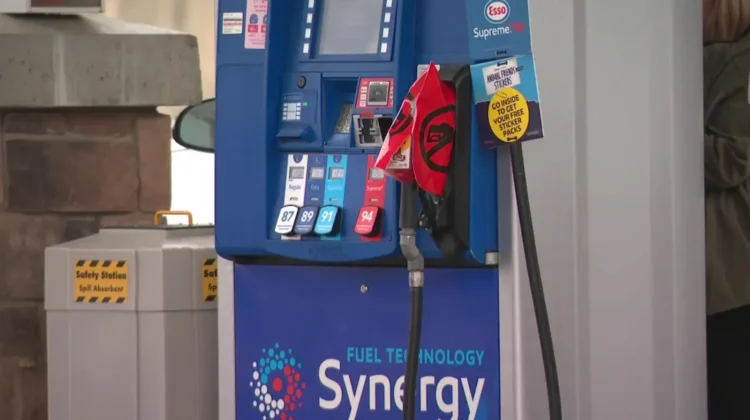
The incident began when a staff member at the gas station noticed an unfamiliar and suspicious-looking object placed on one of the fuel pumps. Given the sensitive nature of gasoline pumps and their proximity to flammable materials, even minor irregularities are treated with caution.
Employees are trained to report unusual objects immediately, especially in high-risk environments such as fuel stations. In this case, the employee followed protocol by alerting authorities rather than attempting to handle or remove the object.
Location of the Incident
The gas station is situated near King Street East and Sportsworld Crossing Road, a well-trafficked corridor in Kitchener, a city known for its mix of residential neighborhoods, commercial zones, and industrial areas.
The station’s location added urgency to the response, as nearby businesses and passing vehicles could potentially be affected if the object had posed a genuine threat.
Immediate Emergency Response and Evacuation Measures
Police Arrive and Secure the Area
After receiving the call, officers from the Waterloo Regional Police Service arrived promptly at the scene. Their first priority was to secure the area and ensure the safety of both employees and customers.
Given the uncertainty surrounding the object, officers initiated precautionary measures rather than assuming it was harmless. This included restricting access to the gas station and redirecting foot and vehicle traffic away from the immediate vicinity.
Evacuation of the Gas Station and Surrounding Area
As a safety precaution, the gas station was evacuated. Nearby areas were also cleared to reduce any potential risk. This type of evacuation is standard protocol when dealing with unidentified objects in sensitive environments.
The decision to evacuate was made quickly, reflecting the priority placed on public safety over convenience or business continuity. Even in cases where threats later prove to be non-existent, emergency protocols are designed to err on the side of caution.
Shutdown of Fuel Pumps and Fire Department Standby
Emergency Fuel Shutoff Activated
One of the most critical steps taken during the incident was the shutdown of gas pumps using the station’s emergency fuel cutoff system. This system is designed to immediately halt fuel flow in the event of fire risk, spill, or security threat.
By disabling the pumps, authorities reduced the risk of ignition or escalation while the object was being assessed.
Fire Department Readiness
The Kitchener Fire Department was also placed on standby due to the nature of the location and the potential hazards associated with fuel storage and distribution.
Although firefighters did not ultimately need to intervene directly, their presence ensured rapid response capability in case the situation escalated unexpectedly.
Fire crews are often involved in such incidents not only for fire suppression but also for hazardous materials assessment and scene safety coordination.
Involvement of the Explosives Disposal Unit
Specialized Assessment of the Object
Given the uncertainty surrounding the item, the police consulted their Explosives Disposal Unit to evaluate whether it posed any risk. This specialized team is trained to handle and assess potentially dangerous devices, including unexploded ordnance, suspicious packages, and improvised explosive threats.
Their involvement reflects standard procedure whenever there is even a minimal possibility of explosive materials being present in a public space.
Determination of No Threat
After careful examination, authorities determined that the object did not pose any safety risk. It was classified as harmless, and no evidence suggested that it had been designed or placed to cause harm.
This conclusion allowed officers to gradually reduce the emergency response level and begin reopening the area once it was deemed safe.
Investigation Findings and Official Statement
No Evidence of Malicious Intent
Following the assessment, investigators from the Waterloo Regional Police Service confirmed that there was no indication the object had been placed with malicious intent. There was also no evidence suggesting an attempt to create public panic or disrupt normal operations.
This finding is significant, as many similar incidents initially raise concerns about intentional wrongdoing or threats to public safety.
Public Safety Confirmed
Authorities issued a public statement clarifying that there were no ongoing safety concerns related to the incident. Once the object was deemed non-threatening, normal operations were expected to resume.
The communication emphasized that while the situation was treated seriously at the time, it ultimately resolved without incident.
Understanding Why Such Incidents Are Treated Seriously
High-Risk Environment Considerations
Gas stations are inherently sensitive locations due to the presence of flammable fuels and electrical systems. Even a small ignition source can create dangerous consequences if combined with gasoline vapors.
For this reason, any unidentified object near fuel infrastructure is treated as a potential hazard until proven otherwise.
Standard Emergency Protocols
Law enforcement and emergency services follow strict protocols designed to minimize risk. These include:
Immediate area isolation
Evacuation of civilians
Disabling fuel systems
Coordination with fire services
Specialized explosive assessment when necessary
These steps are not taken because a threat is confirmed, but because uncertainty itself can pose risk in such environments.
Community Impact and Temporary Disruption
Business Interruption
Although the incident was resolved without damage, the temporary shutdown of the gas station and surrounding area likely caused brief disruption to local businesses and motorists.
Fuel stations in busy corridors often serve high volumes of traffic, meaning even short closures can affect daily routines for commuters and delivery vehicles.
Public Reaction and Awareness
Incidents like this often raise public curiosity and concern, even after being declared false alarms. However, they also serve as reminders of the importance of vigilance and reporting unusual activity.
Members of the public are encouraged to report suspicious items rather than ignore them, as early reporting enables authorities to assess potential risks quickly.
Broader Context: False Alarms in Public Safety Operations
Why False Alarms Occur
False alarms involving suspicious objects are not uncommon in urban and semi-urban environments. Items may appear unusual due to placement, packaging, or context, even when they are harmless.
In many cases, routine objects can be misinterpreted, especially in high-alert environments such as fuel stations, transit hubs, and public events.
Balancing Safety and Disruption
Emergency services face the challenge of balancing rapid response with minimizing disruption. While many incidents ultimately prove non-threatening, each must be treated with seriousness until confirmed otherwise.
This cautious approach helps ensure that genuine threats are not overlooked.
Role of Interagency Coordination in Emergency Response
Police and Fire Collaboration
The coordinated response between the Waterloo Regional Police Service and the Kitchener Fire Department demonstrates the importance of interagency cooperation in emergency situations.
Each agency brings specialized expertise, whether in law enforcement, fire safety, hazardous materials handling, or public evacuation procedures.
Specialized Units and Decision Making
The involvement of the Explosives Disposal Unit further highlights how layered emergency response systems are designed to address uncertainty at multiple levels.
This structured approach ensures that decisions are informed, cautious, and based on technical evaluation rather than assumption.
Conclusion: A Safe Resolution After a Cautious Response
The suspicious object found at a Kitchener gas station near King Street East and Sportsworld Crossing Road ultimately proved to be harmless, but the response it triggered was swift, coordinated, and thorough.
Authorities from the Waterloo Regional Police Service acted quickly to secure the area, evacuate the premises, and involve specialized units to assess any potential risk. Support from the Kitchener Fire Department ensured that fire safety considerations were addressed throughout the incident.
Although the event was later classified as a false alarm, it demonstrated the effectiveness of emergency protocols designed to protect public safety in uncertain situations. It also highlighted the importance of vigilance in environments where even minor irregularities can prompt significant concern.