Stick to the Facts
Add Nbsla.ca as a Preferred Source on Google to see more of our stories in your search results.

The global airline industry is entering one of its most turbulent phases in years, driven by a sharp and sustained rise in jet fuel prices, geopolitical instability, and weakening financial resilience among carriers. At the center of this unfolding crisis is Spirit Airlines, a major U.S. budget carrier reportedly on the verge of collapse after failing to secure critical government financial support.
What began as a fuel cost shock following renewed conflict involving Iran has now escalated into a systemic challenge for airlines across continents. From North America to Europe and Asia, carriers are cutting flights, raising fares, adding surcharges, and in some cases warning of bankruptcy risk if conditions do not improve.
This is no longer a regional disruption. It is a global aviation stress test.
Spirit Airlines Faces Existential Threat Amid Failed Rescue Efforts
Spirit Airlines is now in its most precarious financial position since its founding. Reports indicate the airline was seeking a $500 million government-backed rescue package, but negotiations have stalled after it failed to secure support from bondholders and key stakeholders.
Without fresh liquidity, the airline is rapidly burning through its remaining cash reserves. Legal advisers have warned that liquidation could result in the loss of more than 17,000 jobs and billions of dollars in claims.
The immediate trigger is the surge in fuel prices, which have roughly doubled since geopolitical tensions escalated in the Middle East. For a low-cost carrier like Spirit, which relies heavily on tight margins and high aircraft utilization, fuel inflation has quickly erased operational flexibility.
The airline had temporarily delayed bankruptcy-related proceedings while continuing negotiations, but insiders suggest time is running out. If no funding solution emerges soon, Spirit could become one of the largest airline failures in recent U.S. aviation history.
Why Jet Fuel Prices Are Driving a Global Aviation Crisis
The aviation industry is uniquely vulnerable to fuel price volatility. Jet fuel is one of the largest operating costs for airlines, often accounting for 20% to 40% of total expenses.
The recent spike has been triggered by disruptions linked to geopolitical conflict involving Iran, which has affected global oil markets. As crude prices rise, refiners pass those costs directly into jet fuel pricing.
This surge has created a cascading effect:
Airlines are revising profit forecasts downward
Carriers are reducing flight schedules
Ticket prices are increasing across most markets
Ancillary fees such as baggage charges are rising
Even well-hedged airlines are struggling to absorb the shock, as long-term fuel contracts begin to expire and hedging benefits weaken.
United Airlines and U.S. Carriers Signal Fare Increases and Profit Pressure
Major U.S. airlines are openly adjusting expectations.
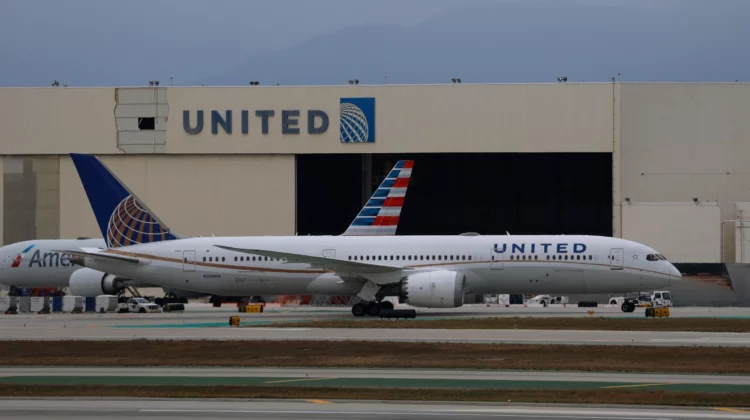
United Airlines has warned that ticket prices may need to rise by 15% to 20% to offset fuel costs. The carrier has already increased baggage fees and reduced its earnings outlook for the year.
Delta Air Lines has also scaled back capacity growth plans and increased checked baggage fees. Its profit forecasts have fallen below Wall Street expectations as fuel expenses rise faster than revenue recovery strategies can compensate.
Southwest Airlines, Frontier Airlines, Alaska Air, and American Airlines are all taking similar measures, including:
Higher baggage fees
Reduced flight expansion plans
Lower earnings guidance
Selective route cuts
The common theme is clear: fuel inflation is forcing a structural reset in pricing strategy across the U.S. aviation market.
Europe: Airlines Cancel Thousands of Flights and Raise Ticket Prices
European carriers are reacting aggressively to protect margins.
Lufthansa Group has taken one of the most dramatic steps, canceling approximately 20,000 flights and grounding aircraft to reduce fuel consumption. The airline has also removed unprofitable routes and scaled back regional operations.
Air France-KLM is increasing long-haul fares and has canceled hundreds of flights due to operating costs. KLM alone has suspended dozens of routes that are no longer financially viable.
British Airways’ parent company has acknowledged that ticket prices may need to adjust, though hedging strategies are providing temporary relief. Still, executives warn that fuel inflation cannot be fully absorbed.
Low-cost carriers are also under pressure. EasyJet has warned customers to expect higher prices in the coming months once hedging protections expire, even though it has pledged no immediate surcharges.
Ryanair stands out as an exception, with its leadership stating the airline is better insulated due to strong fuel hedging positions and a commitment to avoid fare surcharges.
Asia-Pacific Airlines Cut Capacity and Add Fuel Surcharges
Across Asia, airlines are implementing widespread operational adjustments.
Air India has introduced a revised fuel surcharge system tied to distance-based pricing. Akasa Air has added surcharges on both domestic and international routes. Indigo has introduced new fuel fees across multiple flight categories.
In East Asia, China Eastern Airlines has raised domestic fuel surcharges, while Cathay Pacific and its low-cost subsidiary HK Express have reduced flight schedules and increased surcharges significantly.
Korean Air has entered emergency cost-control mode, signaling internal restructuring and efficiency drives to offset fuel pressures.
In Southeast Asia, Air New Zealand has reduced flights and suspended earnings forecasts, while Vietjet and Vietnam Airlines are cutting routes and seeking government relief from aviation-related taxes.
The pattern is consistent: capacity reduction, price increases, and operational tightening.
Africa, Middle East, and Emerging Markets Face Acute Pressure
Emerging markets are experiencing some of the most severe impacts due to limited financial buffers.
In Nigeria, government intervention has been required to prevent airline shutdowns. Authorities have capped jet fuel prices and allowed airlines to purchase fuel on credit to avoid mass cancellations.
Pakistan International Airlines has increased both domestic and international fares. In Thailand, Thai Airways has implemented fare hikes of up to 15%.
These markets are particularly sensitive because airlines often lack hedging mechanisms and operate on thinner margins than their Western counterparts.
Budget Airlines Are Being Hit the Hardest
Low-cost carriers are disproportionately affected by fuel inflation.
Spirit Airlines is the most extreme example, but it is not alone.
AirAsia X has reduced capacity and added fuel surcharges. Spring Airlines in China and Spring Airlines in other regions are adjusting pricing structures. Norse Atlantic has canceled long-haul routes entirely due to unsustainable fuel economics.
Volotea in Europe has introduced a dynamic pricing model tied directly to fuel costs, effectively passing volatility to customers after ticket purchase.
The core issue is structural: low-cost models depend on stable fuel prices and high load factors, both of which are now under pressure.
Airlines Shift Strategy: Fees Replace Ticket Stability
One of the most significant changes emerging from this crisis is the rapid expansion of ancillary fees.
Airlines are increasingly relying on:
Checked baggage fee increases
Seat selection charges
Fuel surcharges
Service add-ons
Examples include American Airlines and Alaska Air raising baggage fees, JetBlue increasing optional service charges, and WestJet introducing new fuel surcharges.
This shift reflects a broader industry trend: base fares are becoming less reflective of total travel cost, while add-ons are absorbing volatility.
Government and Regulatory Responses Across Regions
Governments are stepping in selectively, but with mixed results.
The European Commission has proposed coordinated fuel distribution measures under a policy package aimed at stabilizing jet fuel availability across member states. The goal is to prevent localized shortages and uneven pricing.
The United Kingdom has encouraged refineries to maximize jet fuel output to maintain supply flexibility.
However, no large-scale global subsidy or bailout framework has emerged, leaving airlines largely exposed to market forces.
This lack of coordinated intervention is a key factor behind financial stress in weaker carriers like Spirit Airlines.
What This Means for Travelers: Higher Prices and Fewer Routes
For passengers, the impact is becoming increasingly visible:
Higher ticket prices across nearly all regions
More frequent surcharges and hidden fees
Reduced flight options on less profitable routes
Fewer promotional fares and discounts
Some airlines are attempting to reassure customers that prices will remain stable, but industry-wide hedging expirations suggest that increases are likely to continue through the next pricing cycles.
Holiday travel, especially long-haul international routes, is expected to be most affected.
Conclusion: A Structural Turning Point for Global Aviation
The crisis facing Spirit Airlines is not an isolated corporate failure. It is a warning sign for the global aviation sector.
Soaring jet fuel prices, driven by geopolitical instability, are exposing weaknesses in airline business models that depend on low margins, high volume, and stable input costs.