Stick to the Facts
Add Nbsla.ca as a Preferred Source on Google to see more of our stories in your search results.

The global aviation industry is facing fresh turbulence as soaring jet fuel prices—driven by escalating tensions in the Middle East—force airlines worldwide to cancel flights, cut capacity, and introduce new charges for passengers. The situation is rapidly evolving, and its impact is now being felt across continents, including North America, where major Canadian airports report hundreds of flight disruptions.
Fuel Crisis Sends Shockwaves Through Aviation
Airlines are grappling with a sharp spike in fuel costs, which have nearly doubled since conflict intensified in the Middle East. Aviation fuel, one of the largest operating expenses for carriers, has become significantly more expensive, squeezing already thin profit margins.
This has triggered a chain reaction: reduced flight schedules, higher ticket prices, and added fees for services that were once included. Industry analysts warn that if the crisis persists, travelers should expect continued volatility in both availability and pricing.
Airlines Cutting Flights and Raising Prices
Major global carriers are already taking aggressive steps to manage rising costs:
- United Airlines has warned fares could rise by up to 20% while lowering its earnings outlook due to increased fuel expenses.
- Lufthansa has cancelled around 20,000 flights to stabilize operations.
- Air France-KLM is increasing long-haul ticket prices and has already cut hundreds of flights through its subsidiary KLM.
- Delta Air Lines and American Airlines have raised baggage fees and scaled back capacity.
Budget carriers are feeling the pressure even more intensely. Spirit Airlines is reportedly on the brink of collapse after failing to secure a government bailout, highlighting how vulnerable low-cost airlines are to sudden cost spikes.
Canada Feeling the Impact
While much of the disruption began internationally, the ripple effects are now clearly visible in Canada. Travel demand remains high, but operational constraints are growing.
Reports indicate that major Canadian airports report hundreds of flight disruptions, including delays and cancellations tied to aircraft availability, tighter schedules, and cost-cutting measures by airlines.
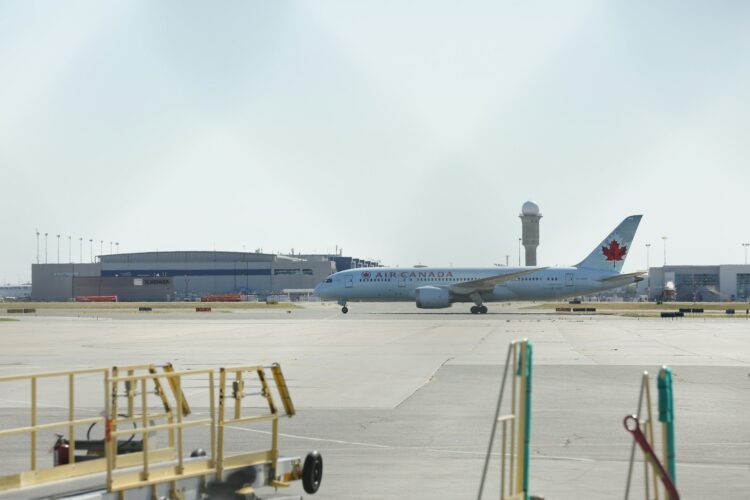
Air Canada has already announced reductions in some routes, including trimming flights to New York during peak months. Other carriers operating in Canada are expected to follow similar strategies if fuel prices remain elevated.
Asia and Europe Also Hit Hard
The crisis is not limited to North America:
- Air India and Akasa Air have introduced new fuel surcharges for domestic and international routes.
- Cathay Pacific is cancelling flights and increasing fuel surcharges by over 30%.
- Air New Zealand has reduced flight schedules and paused financial forecasts due to uncertainty.
Across Europe, governments are stepping in. The European Commission has proposed measures to optimize fuel distribution and prevent shortages, while the UK has urged refineries to maximize jet fuel production.
Passengers Paying the Price
For travelers, the impact is becoming unavoidable:
- Higher ticket prices, especially for long-haul flights
- New or increased baggage fees
- Reduced flight options on popular routes
- Greater risk of delays and cancellations
Even airlines that have not yet made drastic changes are warning that fare increases are likely if the fuel crisis continues.
What Happens Next?
The aviation sector is highly sensitive to geopolitical events, and the current situation shows no immediate signs of easing. If tensions persist, airlines may be forced to make deeper cuts and implement additional charges.
For now, travelers are advised to book early, remain flexible with travel plans, and monitor airline updates closely.
One thing is already clear: as major Canadian airports report hundreds of flight disruptions, the global fuel crisis is no longer a distant issue—it’s directly affecting passengers’ travel plans in real time.