Stick to the Facts
Add Nbsla.ca as a Preferred Source on Google to see more of our stories in your search results.

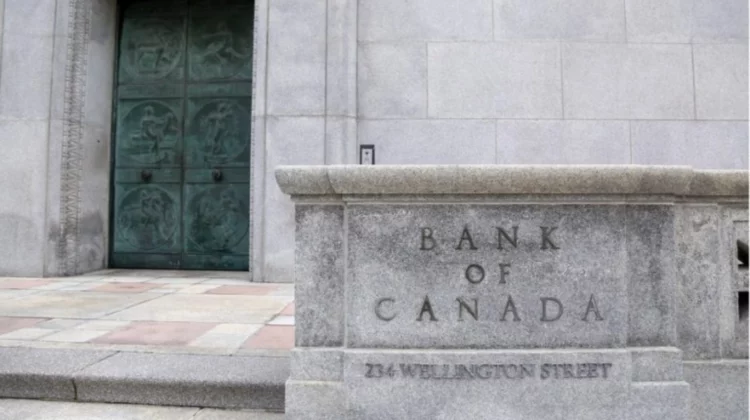
The Bank of Canada has once again chosen stability over sudden change, holding its benchmark interest rate at 2.25 percent for the fourth consecutive decision. While the move was widely anticipated by economists and financial markets, the message accompanying the decision was far more nuanced. Policymakers made it clear that although the current rate appears appropriate for now, the path ahead is anything but predictable.
At the center of this cautious stance is a global environment marked by geopolitical tensions and trade uncertainty. Rather than committing firmly to either rate hikes or cuts, the central bank emphasized flexibility, signaling that future decisions will depend heavily on how key risks evolve in the coming months.
Why the Bank Believes Rates Are “About Right” for Now
Governor Tiff Macklem indicated that the current policy rate is likely well-positioned if the economy unfolds as expected. In other words, if inflation trends downward as projected and economic growth remains steady, there may only be minor adjustments ahead.
This relatively balanced outlook reflects a central bank attempting to navigate between two competing priorities: keeping inflation under control while also supporting economic growth. After a period of aggressive rate changes in recent years, the current pause suggests policymakers are taking time to assess the cumulative impact of past decisions.
Macklem’s remarks offered rare forward guidance, highlighting that while stability is the base case, it is far from guaranteed. The bank is not locking itself into a fixed trajectory but instead preparing to respond quickly to changing conditions.
The Two Major Risks Shaping Canada’s Economic Outlook
Geopolitical Tensions and Energy Prices
One of the most significant uncertainties identified by the Bank of Canada is the ongoing conflict involving Iran and its potential impact on global energy markets. Oil prices are a critical variable for the Canadian economy, which is a major energy exporter.
If the conflict drives oil prices higher for an extended period, it could have a dual effect. On one hand, higher oil prices typically boost Canada’s export revenues and overall economic output. On the other hand, they increase costs for consumers and businesses, particularly through higher fuel and transportation expenses.
More importantly, sustained increases in energy prices could reignite inflationary pressures. If that happens, the central bank may have little choice but to raise interest rates again to prevent inflation from spiraling out of control.
Trade Uncertainty with the United States
The second major risk revolves around the future of North American trade relations, particularly the upcoming review of the Canada-United States-Mexico Agreement. Trade has long been a cornerstone of Canada’s economy, and any disruption could have far-reaching consequences.
If the United States were to impose stricter trade restrictions on Canadian goods, it could weaken exports, slow economic growth, and reduce business investment. In such a scenario, the Bank of Canada might need to lower interest rates to cushion the economic impact and support domestic demand.
This dual-risk environment places the central bank in a delicate balancing act, where policy decisions could swing in either direction depending on how these external factors unfold.
Inflation Outlook: Temporary Pressures or Lasting Concern?
Short-Term Spike Expected
The Bank of Canada expects inflation to rise temporarily, potentially peaking around three percent in the near term. This increase is largely attributed to higher energy prices and base effects from previous periods.
However, the central bank remains cautiously optimistic that this spike will be short-lived. If oil prices stabilize or decline as markets currently expect, inflation should gradually ease back toward the bank’s two percent target by early next year.
Monitoring Inflation Expectations
A key concern for policymakers is not just current inflation but how businesses and consumers perceive future price changes. If people begin to expect persistently higher inflation, it can become self-fulfilling, as wages and prices adjust accordingly.
So far, there is little evidence that rising oil prices are feeding into broader inflation expectations. Nevertheless, the central bank is closely monitoring this risk, as any shift in expectations could require a more aggressive policy response.
Economic Growth Remains Modest but Stable
Updated Growth Projections
Despite the uncertainties, the Bank of Canada’s baseline forecast for economic growth remains relatively stable. The economy is expected to grow by 1.2 percent this year and 1.6 percent in 2027, slightly higher than earlier projections.
These modest growth rates reflect a balanced but cautious economic environment. While higher oil prices provide some support, other factors such as global uncertainty and domestic cost pressures continue to weigh on activity.
The Mixed Impact of Oil Prices
Oil plays a complex role in Canada’s economy. As a net exporter of energy, the country benefits from higher global prices through increased revenues and investment in the energy sector.
However, the benefits are not evenly distributed. Higher fuel costs can strain household budgets and increase operating expenses for businesses, particularly those reliant on transportation and logistics. This can offset some of the gains from stronger exports, leading to a more subdued overall impact on growth.
Monetary Policy at a Crossroads
The Possibility of Rate Cuts
If trade tensions escalate and economic growth weakens, the Bank of Canada may need to lower interest rates to stimulate the economy. Rate cuts could encourage borrowing and spending, helping to offset declines in exports and investment.
This scenario would likely emerge if external demand falters or if domestic economic indicators show signs of significant slowdown.
The Risk of Rate Hikes
Conversely, if inflation proves more persistent, particularly due to sustained increases in energy prices, the central bank may be forced to raise rates again. Macklem even suggested the possibility of consecutive rate increases if inflationary pressures intensify.
Such a move would aim to cool demand and prevent inflation from becoming entrenched, even if it comes at the cost of slower economic growth.
A Nimble Approach to Policy
The overarching theme of the Bank of Canada’s message is flexibility. Rather than committing to a fixed path, policymakers are prepared to adapt quickly to new information and evolving risks.
This “nimble” approach reflects the unusually high level of uncertainty in the current global environment. It also underscores the challenges central banks face in balancing competing economic forces.
What This Means for Canadians
Borrowers and Mortgage Holders
For individuals with mortgages or other loans, the current rate hold provides a degree of short-term stability. However, the possibility of future rate changes means that borrowers should remain cautious and prepared for potential fluctuations.
Businesses and Investors
Businesses must navigate an environment where both borrowing costs and external demand could shift quickly. Investment decisions may be influenced by expectations around trade policy and global economic conditions.
Consumers and Everyday Costs
Consumers may continue to feel the impact of higher prices, particularly for energy-related expenses. While inflation is expected to ease over time, the pace of that decline will depend on factors largely outside Canada’s control.
The Missing Piece: Government Spending Plans
It is worth noting that the Bank of Canada’s latest outlook does not yet incorporate recent federal government spending announcements. These fiscal measures could influence economic growth and inflation in the months ahead, potentially altering the central bank’s projections.
As more details emerge and their impact becomes clearer, they may play a role in shaping future monetary policy decisions.
Looking Ahead: A Delicate Balance Between Growth and Stability
The Bank of Canada’s latest decision highlights the complexity of the current economic landscape. With risks pulling in opposite directions, policymakers are navigating a narrow path between supporting growth and controlling inflation.
While the current interest rate appears appropriate for now, the future remains highly uncertain. Whether rates move higher or lower will depend on how global events unfold, particularly in energy markets and international trade.