Stick to the Facts
Add Nbsla.ca as a Preferred Source on Google to see more of our stories in your search results.

The 2026 FIFA World Cup was supposed to be a historic celebration of global soccer, American hospitality, and modern sporting infrastructure. Instead, the 2026 FIFA World Cup transit conversation has become a global debate about America’s aging transportation systems, expensive public transit, traffic congestion, and crumbling infrastructure.
As millions of international fans prepare to arrive for the 2026 FIFA World Cup across the United States, Canada, and Mexico, many are discovering a shocking reality: the richest country in the world still struggles to move people efficiently.
The 2026 FIFA World Cup transit situation is now under global scrutiny. Visitors from Europe, Asia, and South America, many coming from countries with high-speed rail, walkable cities, affordable metro systems, and reliable public transportation, are preparing for an American experience built around highways, parking lots, school buses, and surge-priced transit tickets.
America spent years convincing FIFA that it was ready for the world’s biggest sporting event. Now the world is asking whether the country’s infrastructure is truly prepared for the pressure of the 2026 FIFA World Cup.
The 2026 FIFA World Cup Transit Problem Is Becoming Impossible to Ignore
The biggest issue surrounding the 2026 FIFA World Cup transit debate is simple: most American cities were designed for cars, not for millions of international soccer fans moving through crowded urban centers.
Unlike previous FIFA World Cups hosted in countries with advanced rail networks and integrated transit systems, the United States remains heavily dependent on private vehicles. That dependence is now creating massive concerns ahead of the 2026 FIFA World Cup.
The American Society of Civil Engineers gave U.S. infrastructure a “C” overall grade, while public transit received an alarming “D” rating. Infrastructure experts warn that America is already struggling to maintain its current systems, making the arrival of nearly 5 million World Cup visitors an enormous challenge.
International fans are now comparing the 2026 FIFA World Cup transit setup to previous tournaments.
In Qatar during the 2022 FIFA World Cup, all stadiums were connected through a modern metro system. Fans could travel efficiently between venues with minimal delays. In Russia during the 2018 FIFA World Cup, ticket holders received free train travel between host cities. South Africa also provided free rail access for match-day fans during the 2010 tournament.
The United States offers a very different experience.
Many stadiums are located far from city centers, surrounded by highways and parking lots. Some venues are difficult or nearly impossible to access on foot. Even basic pedestrian infrastructure remains limited in many host cities.
The 2026 FIFA World Cup transit concerns have become so widespread that social media users are mocking America’s transportation system through viral memes and TikTok videos.
MetLife Stadium Has Become the Symbol of the 2026 FIFA World Cup Transit Debate
No stadium better represents the 2026 FIFA World Cup transit controversy than MetLife Stadium.
The stadium, which will host the 2026 FIFA World Cup final, has become the center of criticism due to transportation challenges and rising travel costs.
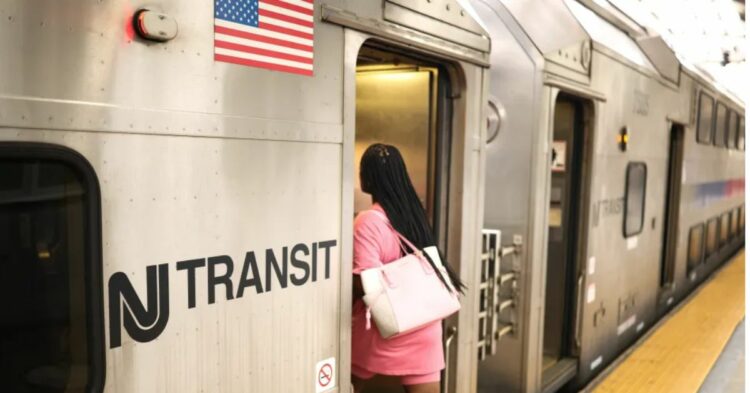
Initially, round-trip train tickets for match days reportedly surged from the regular $12.90 fare to as high as $150. Following public backlash, prices were reduced multiple times, eventually dropping closer to $98.
Even at reduced pricing, many fans and transportation advocates argued that the costs were excessive.
The situation became so controversial that organizers introduced fleets of yellow American school buses to transport fans from Manhattan to the stadium. Up to 300 buses are expected to operate on peak match days.
For international visitors arriving from cities like Madrid, Munich, London, or Tokyo, the image of riding school buses to the FIFA World Cup final became symbolic of the broader 2026 FIFA World Cup transit issue.
The irony is difficult to ignore. The world’s largest sporting event is arriving in one of the wealthiest countries on Earth, yet transportation solutions resemble emergency improvisation rather than world-class planning.
Adding to the frustration, there is no standard public parking available directly at MetLife Stadium during the tournament. Fans driving to the venue must reserve parking elsewhere and walk across pedestrian connections to reach the stadium.
Meanwhile, helicopter transportation services are offering premium travel experiences costing thousands of dollars for wealthy visitors seeking to avoid traffic congestion entirely.
The contrast between luxury helicopter rides and overloaded school buses perfectly captures the growing inequality visible throughout the 2026 FIFA World Cup transit system.
International Fans Are Shocked by America’s Car-Centered Infrastructure
The 2026 FIFA World Cup transit conversation has revealed a larger issue: many international visitors are unfamiliar with America’s dependence on cars.
In much of Europe and Asia, fans are accustomed to efficient metro systems, walkable neighborhoods, and affordable rail transportation. Stadiums are often directly connected to transit hubs.
In the United States, however, many stadiums were built in suburban areas accessible primarily by highways.
That difference is creating culture shock for international travelers.
Visitors expecting seamless train access are instead discovering traffic congestion, expensive parking fees, limited sidewalks, and long travel times.
Some journalists testing pedestrian access to stadiums found routes blocked entirely or interrupted by dangerous highway infrastructure.
Infrastructure experts warn that the 2026 FIFA World Cup transit strain could overwhelm rideshare services, buses, rail systems, and local transportation workers.
There are also concerns about staffing shortages. Transit agencies across America already struggle to hire enough bus drivers and transportation employees. The sudden arrival of millions of tourists could stretch those systems even further.
Some 2026 FIFA World Cup Host Cities Are Handling Transit Better Than Others
Not every host city is facing criticism.
Several cities hosting the 2026 FIFA World Cup have announced more affordable transportation plans.
Los Angeles plans to offer low-cost round-trip transit options, while Philadelphia announced that transit fares would remain unchanged during the tournament.
Houston and Atlanta are also maintaining standard pricing structures.
However, concerns remain strongest in the New York-New Jersey region, where transportation systems are expected to face enormous pressure during the 2026 FIFA World Cup final.
New York City officials are attempting to expand ferry services, improve airport transportation routes, and introduce additional crowd-management systems to cope with demand.
Yet even those efforts may only reduce the stress rather than solve the underlying infrastructure weaknesses.
The 2026 FIFA World Cup Transit Crisis Reflects Decades of Underinvestment
The problems surfacing during the 2026 FIFA World Cup did not appear overnight.
For decades, transportation experts have warned that America has underinvested in public infrastructure while prioritizing highway expansion and suburban development.
The result is a country where airports, rail systems, bridges, buses, and transit corridors often struggle under normal demand, let alone the pressure of a global mega-event like the FIFA World Cup.
The American Society of Civil Engineers estimates that the United States faces trillions of dollars in infrastructure funding gaps over the next decade.
Public transit alone faces a massive shortage in investment.
Many experts now believe the 2026 FIFA World Cup transit crisis could become a turning point for infrastructure policy in the United States.
Large global events often expose weaknesses that governments can no longer ignore. Similar moments occurred before previous Olympic Games and World Cups around the world.
The question is whether America will use the 2026 FIFA World Cup as motivation to modernize transportation systems or simply treat the event as a temporary logistical problem.
Los Angeles Could Offer a Glimpse of the Future
One city receiving praise for long-term planning is Los Angeles.
The city has expanded rail infrastructure significantly in preparation for the 2028 Olympics. Some of those improvements will already benefit fans during the 2026 FIFA World Cup.
Transportation experts say Los Angeles demonstrates what becomes possible when cities commit to long-term infrastructure investment rather than short-term fixes.
Still, even Los Angeles cannot fully escape the broader challenges facing American transit systems.
Traffic congestion, limited walkability, and regional sprawl remain major concerns.
The 2026 FIFA World Cup Is Becoming More Than Just Soccer
The 2026 FIFA World Cup transit discussion is no longer only about transportation. It has evolved into a larger reflection on American urban planning, public investment, inequality, and national priorities.
Millions of visitors are about to experience the American transportation system all at once.
They will land at airports in cities like New York City, Boston, Miami, and Los Angeles. They will sit in traffic, pay premium transportation costs, navigate unfamiliar transit systems, and attempt to reach massive stadiums often built far from urban centers.
For many international visitors, the 2026 FIFA World Cup may become their first direct encounter with the realities of American infrastructure.
The event was meant to showcase the United States as a global leader capable of hosting the world’s biggest sporting tournament.
Instead, the 2026 FIFA World Cup transit debate is revealing uncomfortable truths about how America moves people, how little it invests in public transportation, and how difficult it has become to build modern infrastructure at scale.
The yellow school buses heading toward World Cup stadiums may ultimately become the defining image of the 2026 FIFA World Cup: a country improvising transportation solutions because it never fully built the systems it needed in the first place.