Stick to the Facts
Add Nbsla.ca as a Preferred Source on Google to see more of our stories in your search results.

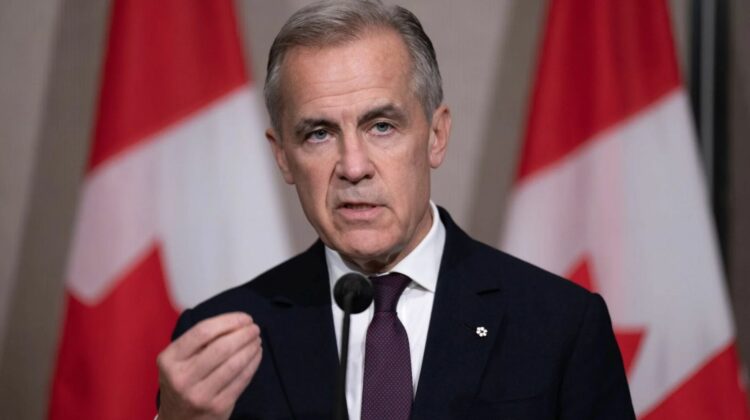
Prime Minister Mark Carney has signalled that Canada could move quickly to lift provincial bans on American alcohol—but only if the United States backs down from sweeping tariffs that have hit key Canadian industries.
Speaking in Ottawa, Carney made it clear that any easing of restrictions on U.S. beer, wine and spirits hinges on progress in broader trade negotiations with U.S. President Donald Trump. His comments come as tensions between the two countries deepen over tariffs on steel, automobiles and forestry products.
Liquor Ban Tied Directly to Tariff Relief
Carney emphasized that the provincial restrictions on U.S. alcohol are not arbitrary. They were introduced as a response to aggressive U.S. trade measures, including Section 232 tariffs that have disrupted Canadian manufacturing and resource sectors.
According to the prime minister, there is little political or public support within Canada to reverse the liquor ban while tariffs remain in place. He noted that provinces—many of which control alcohol distribution—are unlikely to restock American products unless there is meaningful relief from Washington.
“We can make progress very quickly,” Carney said, but only if the U.S. shows willingness to ease its trade actions.
Provinces Hold the Power—and the Line
While the federal government is leading negotiations, the decision to lift liquor bans ultimately lies with provincial governments. In provinces like Ontario, the Liquor Control Board of Ontario continues to keep U.S. alcohol off its shelves, reinforcing Canada’s retaliatory stance.
Ontario Premier Doug Ford has been particularly firm, saying he would reverse the ban “in a heartbeat” if the U.S. stopped what he described as damage to Canada’s auto sector and broader economy. Until then, he has ruled out any concessions.
Some provinces, including Alberta and Saskatchewan, have already begun restocking limited U.S. products. However, most jurisdictions remain aligned with the federal government’s tougher approach.
U.S. Pressure Mounts Over Alcohol Restrictions
The Biden-era trade framework has been replaced with a more confrontational stance under Trump, and American officials are now openly criticizing Canada’s liquor policies.
U.S. Trade Representative Jamieson Greer warned that Washington may consider enforcement actions if Canada does not lift restrictions on American wine and spirits. Similarly, Commerce Secretary Howard Lutnick called the bans “outrageous,” though he did not address the tariffs that triggered Canada’s response.
Carney pushed back strongly, arguing that U.S. tariffs—some as high as 50 per cent on metals and 25 per cent on vehicles—are far more damaging than provincial alcohol restrictions. He described these measures as violations of the Canada-United States-Mexico Agreement, the trilateral trade deal governing North American commerce.
Political Friction Complicates Negotiations
Beyond economic policy, political tensions are also shaping the dispute. Carney criticized Ford for running U.S.-targeted ads last year that invoked former president Ronald Reagan and his pro–free trade stance. According to Ottawa, those ads irritated Trump and contributed to stalled negotiations.
Ford, however, has doubled down, praising Reagan’s legacy and suggesting Trump should follow a similar approach to trade—one focused on expansion rather than restriction.
What Comes Next for Canada–U.S. Trade?
Despite the sharp rhetoric, Carney expressed cautious optimism that a resolution is possible. He acknowledged that negotiations will take time but insisted Canada will not accept terms dictated solely by Washington.
For now, the liquor ban remains a powerful negotiating tool. Its future will likely depend on whether both sides can find common ground on tariffs—particularly those affecting Canada’s core industries.
As talks continue, businesses on both sides of the border are watching closely. A breakthrough could quickly restore normal trade flows, while further escalation risks deepening one of the most significant Canada–U.S. trade disputes in recent years.