Stick to the Facts
Add Nbsla.ca as a Preferred Source on Google to see more of our stories in your search results.

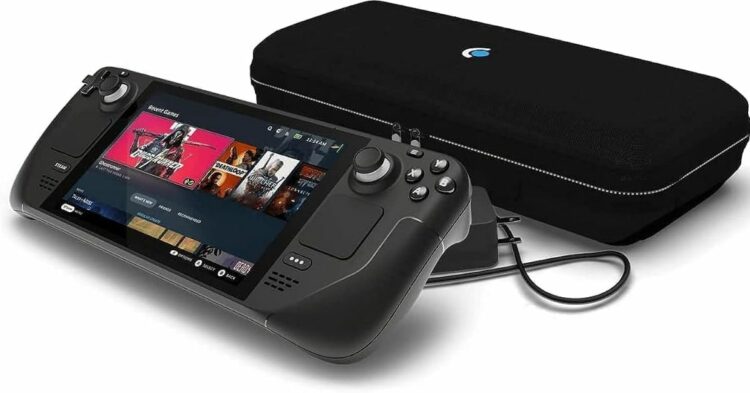
Valve has stunned the gaming world with a massive Steam Deck price increase that pushes the company’s most expensive handheld gaming device close to the $1,000 USD mark. The new Valve Steam Deck price increase affects both OLED models, sending the 512GB Steam Deck OLED from $549 USD to $789 USD and the premium 1TB Steam Deck OLED from $649 USD all the way to $949 USD.
The dramatic Steam Deck price jump arrives without any new hardware upgrades, performance improvements, or redesigned features. Instead, Valve says the Steam Deck price increase is tied to rising component costs, severe RAM shortages, SSD supply problems, and global logistical challenges that are currently reshaping the entire gaming hardware industry.
For gamers who once viewed the Steam Deck as the perfect affordable portable PC gaming machine, the new Steam Deck price feels like a major turning point not only for Valve but also for the future of handheld gaming itself.
The Valve Steam Deck price increase is now one of the most talked-about stories in gaming because it highlights how artificial intelligence demand is starting to directly affect consumer electronics, gaming consoles, and even the future of devices like the Steam Machine.
The updated Steam Deck pricing is already live on Valve’s official website, and reactions from players have been intense.
The biggest shock comes from the premium 1TB Steam Deck OLED model now costing $949 USD. At launch, the Steam Deck gained popularity because it delivered powerful PC gaming in a portable form factor at a surprisingly accessible price. Now, however, many gamers are questioning whether paying nearly $1,000 USD for aging handheld hardware still makes sense.
The Steam Deck OLED remains one of the most popular handheld gaming PCs on the market thanks to its Linux-based SteamOS, access to massive Steam libraries, and portable flexibility. But the Steam Deck price increase changes the conversation entirely.
Many fans expected Valve to eventually release a more powerful Steam Deck successor before introducing such aggressive pricing. Instead, gamers are now being asked to pay hundreds more for the exact same hardware already available before the Valve Steam Deck price increase.
The new Steam Deck prices are staggering:
512GB Steam Deck OLED: increased from $549 USD to $789 USD
1TB Steam Deck OLED: increased from $649 USD to $949 USD
That means the 512GB model jumped by $240 USD while the 1TB Steam Deck OLED increased by $300 USD.
Valve also introduced refurbished alternatives to soften the blow somewhat. Refurbished Steam Deck OLED models now cost $629 USD for the 512GB version and $759 USD for the 1TB edition. Still, even those prices are significantly higher than what many gamers expected from Valve’s handheld ecosystem.
According to Valve, the Steam Deck price increase comes from “the current state of component costs and other global logistical challenges across the industry.” But industry analysts say the real issue goes much deeper than shipping delays.
The core problem is a global RAM and NAND flash shortage fueled heavily by AI hyperscaler demand. Massive artificial intelligence companies are purchasing enormous quantities of memory components, absorbing manufacturing capacity that would normally supply gaming hardware, smartphones, laptops, and storage devices.
Reports indicate that OpenAI alone reportedly secured orders for nearly half of one major manufacturer’s RAM production for 2026. That level of AI infrastructure demand is now creating ripple effects throughout the consumer technology industry.
The Steam Deck price increase is one of the clearest examples yet of how AI is reshaping gaming hardware economics.
Valve is not the only company facing pressure. PC manufacturers, graphics card makers, console suppliers, and SSD producers are all dealing with rising component costs tied to AI expansion. However, because the Steam Deck relies heavily on premium memory and SSD components, Valve appears especially vulnerable to supply shortages.
The situation has also reportedly delayed Valve’s upcoming Steam Machine project.
The Steam Machine, which was rumored to be a streamlined console-style gaming PC, had originally been expected to launch during the first half of 2026. But due to the same RAM and SSD shortages affecting the Steam Deck, the Steam Machine has now reportedly been pushed indefinitely.
For longtime Valve fans, that news adds another layer of frustration.
The original Steam Machine concept was meant to bring PC gaming into living rooms through simplified hardware powered by SteamOS. While Valve experimented with Steam Machine systems years ago, recent rumors suggested the company was preparing a new generation of hardware to compete with traditional gaming consoles.
Now, those ambitions appear stalled because of the same global shortages driving the Valve Steam Deck price increase.
The competitive gaming handheld market also makes the new Steam Deck price harder to justify.
At $949 USD, the 1TB Steam Deck OLED enters pricing territory occupied by newer and more powerful alternatives. Devices like the Xbox Ally X reportedly offer similar gaming performance for lower prices, while standard Xbox Ally systems remain significantly cheaper.
The biggest problem for Valve is perception.
The Steam Deck hardware is no longer brand new technology. While still impressive, the device struggles with some newer AAA games at higher graphical settings. Battery life limitations, thermal constraints, and aging hardware architecture already had gamers anticipating a next-generation Steam Deck model.
Instead of revealing upgraded internals, Valve increased prices dramatically.
For some consumers, the new Steam Deck price now feels disconnected from the product’s age and performance capabilities.
Still, the Steam Deck ecosystem remains extremely attractive for PC gamers invested in Steam libraries. The ability to carry thousands of PC games in a portable format remains one of the biggest strengths of the Steam Deck OLED lineup.
Valve’s software support also continues improving SteamOS compatibility, performance optimization, and user experience. Even with the Steam Deck price increase, many loyal users may still view the handheld as the best portable PC gaming experience available.
But the broader implications extend far beyond Valve.
What is happening with the Steam Deck price increase may soon affect the entire gaming industry. AI infrastructure expansion is consuming unprecedented amounts of computing resources, memory chips, and storage hardware. As companies race to build more advanced AI systems, consumer electronics manufacturers are being forced to compete for the same limited components.
That competition is now pushing up prices for gaming hardware around the world.
Graphics cards already experienced shortages during cryptocurrency booms in previous years. Now, artificial intelligence demand may create a much longer and more severe pricing cycle affecting everything from gaming laptops to handheld PCs and future consoles.
The Valve Steam Deck price increase could therefore become an early warning sign for where gaming hardware pricing is headed next.
Gamers online are already debating whether the Steam Deck OLED remains worth buying after the price increase. Some argue the flexibility of portable PC gaming still justifies the premium, especially for dedicated Steam users. Others believe the new Steam Deck price makes competing handheld devices more attractive.
Social media reactions have ranged from disbelief to anger, with many longtime fans expressing disappointment that Valve raised prices so aggressively without improving the hardware.
At the same time, some analysts believe Valve had little choice.
If component shortages continue worsening throughout 2026, gaming companies may either raise prices or reduce production volumes altogether. Valve likely chose to preserve availability rather than risk severe stock shortages.
The Steam Deck was originally celebrated for democratizing portable PC gaming. It proved that high-quality gaming experiences could fit inside a handheld device without costing luxury-level prices.
Now, however, the Valve Steam Deck price increase threatens that identity.
As AI demand continues transforming global technology supply chains, gamers may soon discover that affordable gaming hardware becomes increasingly difficult to maintain.
For now, the Steam Deck OLED remains one of the most recognizable handheld gaming PCs in the world. But with the Steam Deck price now reaching $949 USD for the highest-end model, the future of portable PC gaming may be entering a far more expensive era.