Stick to the Facts
Add Nbsla.ca as a Preferred Source on Google to see more of our stories in your search results.

The growing threat of a powerful El Niño pattern is once again becoming one of the biggest weather stories of the year, as meteorologists warn that an El Niño forecast to develop during the coming months could dramatically reshape summer weather patterns across the United States. Climate experts are increasingly discussing the possibility of a Super El Niño 2026 event, raising concerns about hotter temperatures, prolonged dry conditions, shifting storm tracks, and near-record global heat levels through 2026 and possibly even 2027.
For residents across Southeast Michigan, including Metro Detroit, the developing El Niño pattern could mean a summer filled with warmer-than-average temperatures, drier conditions, reduced rainfall, and extended stretches of heat. Long-range forecasts now strongly indicate that El Niño conditions are likely to form in the Pacific Ocean, with weather experts closely monitoring whether this system could strengthen into a rare Super El Niño 2026 event.
What Is El Niño and Why Is El Niño 2026 Becoming So Important?
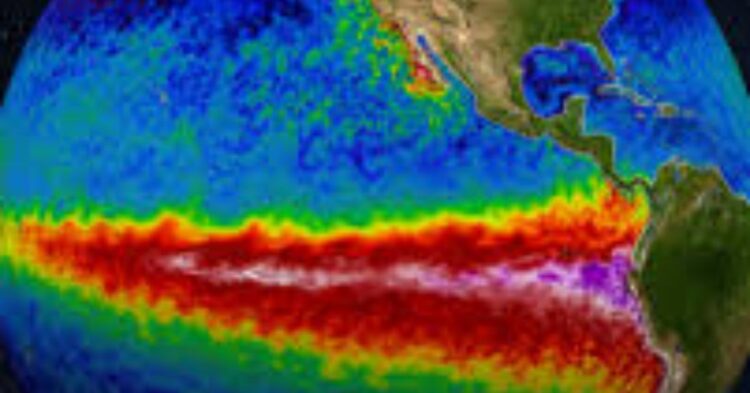
El Niño refers to the warm phase of a naturally occurring climate cycle involving sea surface temperatures across the equatorial Pacific Ocean. During an El Niño event, ocean waters in the central and eastern Pacific become significantly warmer than normal. These warmer ocean temperatures then influence atmospheric circulation patterns around the globe, including weather systems across North America.
Meteorologists say the current El Niño forecast to develop is important because these climate shifts often alter jet stream patterns, storm development, rainfall distribution, and temperature trends across the United States.
The last major El Niño occurred during the winter of 2023-24, but forecasters now believe conditions are again moving toward another potentially significant event. As ocean temperatures continue rising in the tropical Pacific, climate agencies including the Climate Prediction Center are warning that El Niño conditions are increasingly likely during summer and fall 2026.
Super El Niño 2026 Could Push Global Temperatures Near Record Levels
One of the biggest concerns surrounding the developing El Niño pattern is the growing possibility of a Super El Niño 2026 event. A Super El Niño occurs when sea surface temperature anomalies exceed 2 degrees Celsius above normal across the monitored Pacific region.
Historically, Super El Niño events are extremely rare. Since 1950, only three major Super El Niño episodes have been officially recorded, including the historic 1997-98 event and the powerful 2015-16 Super El Niño.
Climate scientists say the chance of a Super El Niño 2026 event currently sits around 37% as the world moves closer toward winter. While that percentage does not guarantee a major event, it is high enough to generate serious concern among meteorologists and climate researchers worldwide.
The concern grows even larger because global warming may be amplifying El Niño intensity. Emerging climate research suggests rising global temperatures are strengthening El Niño and La Niña swings by nearly 10%, making future events potentially more volatile and more impactful than previous decades.
If the Super El Niño 2026 scenario develops fully, scientists warn that 2026 and especially 2027 could rank among the hottest years ever recorded globally.
How El Niño Changes Weather Patterns Across the United States
An El Niño setup dramatically reshapes the position of the jet stream across North America. During a developing El Niño event, the jet stream often shifts farther north across parts of Canada and the northern United States.
At the same time, the southern United States usually experiences an enhanced moisture feed that increases rainfall and storm activity across southern states.
This shifting weather pattern often leaves regions like the Midwest and Great Lakes warmer and drier than average.
For Michigan, including Southeast Michigan and Metro Detroit, an El Niño forecast to develop usually signals:
- Warmer-than-normal summer temperatures
- Reduced rainfall totals
- More dry stretches between storms
- Higher drought potential
- Increased heat wave risks
- More stress on crops and water supplies
Weather experts stress that El Niño does not eliminate thunderstorms completely. Cold fronts and severe weather systems can still move through Michigan during summer. However, the overall seasonal trend tends to favor less rainfall and higher temperatures.
Southeast Michigan Could Face Hotter and Drier Summer Conditions
Residents across Metro Detroit are already hearing increasing discussion about how Super El Niño 2026 could affect local weather patterns.
Meteorologists say the expected El Niño development points toward a summer trend favoring above-average heat across Southeast Michigan. Detroit, Ann Arbor, Flint, Lansing, and surrounding communities may experience longer stretches of dry weather combined with repeated heat surges during the peak summer months.
In a typical El Niño pattern, much of the moisture remains concentrated across the southern United States rather than moving into the Great Lakes region. This reduces widespread rainfall opportunities for Michigan and allows hotter air masses to dominate more frequently.
As a result, Southeast Michigan could experience:
- Increased 90-degree temperature days
- Reduced summer rainfall
- Dry lawns and stressed vegetation
- Elevated wildfire smoke risks from Canadian fires
- Higher energy demand due to air conditioning usage
- Increased drought concerns later in summer
Long-range weather outlooks are already hinting that the developing El Niño pattern could contribute to one of the warmest summers in recent years for parts of the Midwest.
Super El Niño 2026 Could Impact Agriculture, Water Supply and Energy Demand
The possible development of Super El Niño 2026 is not just a weather story. It could also have significant economic and environmental impacts across the United States.
Hotter and drier conditions in parts of the Midwest may increase stress on agriculture during critical growing periods. Crops such as corn and soybeans become more vulnerable during prolonged dry spells combined with intense summer heat.
Water management agencies may also closely monitor reservoir levels and soil moisture conditions if rainfall deficits begin growing throughout the season.
Energy demand is another major concern. Extended heat waves linked to El Niño patterns can sharply increase electricity consumption as millions of households rely heavily on air conditioning systems.
Climate experts also warn that warmer global ocean temperatures combined with El Niño conditions can contribute to more extreme weather swings worldwide, including flooding in some regions and drought in others.
Why El Niño Does Not Guarantee Constant Heat or Drought
Even though the El Niño forecast to develop strongly favors warmer and drier conditions, meteorologists caution that no seasonal forecast is perfect.
Weather patterns still fluctuate week to week, and Michigan can still experience:
- Thunderstorms
- Severe weather outbreaks
- Heavy rainfall events
- Temporary cooler periods
- Frontal passages
El Niño simply shifts the probabilities toward certain outcomes becoming more likely over a full season.
That means Southeast Michigan could still see stormy periods during summer 2026, but the overall trend would likely lean warmer and drier than average.
Climate Change May Be Intensifying El Niño Impacts
Another major factor increasing concern about Super El Niño 2026 is the growing influence of climate change.
Scientists now believe human-driven warming is increasing ocean temperatures globally, which may amplify the strength and volatility of major climate cycles like El Niño and La Niña.
As the atmosphere becomes warmer, it can hold more moisture and energy, increasing the risk of extreme weather patterns worldwide.
Researchers say the combination of climate change and a potential Super El Niño 2026 event could create exceptionally warm global conditions not seen in modern history.
This is one reason many climate scientists believe 2027 may eventually challenge or surpass previous global temperature records if El Niño intensifies significantly.
El Niño Forecast to Develop Will Be Closely Watched Through Summer and Fall
For now, forecasters continue monitoring sea surface temperatures across the Pacific Ocean as El Niño conditions gradually strengthen.
While uncertainty remains regarding whether a full Super El Niño 2026 event will emerge, confidence is increasing that El Niño itself will develop during the coming months.
For Southeast Michigan and much of the Midwest, that means residents should prepare for the strong possibility of a warmer and drier summer pattern ahead.
As meteorologists continue tracking Pacific Ocean temperature trends, the words “El Niño,” “Super El Niño 2026,” and “El Niño forecast to develop” are expected to dominate weather headlines throughout the rest of the year.