Stick to the Facts
Add Nbsla.ca as a Preferred Source on Google to see more of our stories in your search results.

The federal government of Canada is once again under pressure to address longstanding inequities embedded in the Indian Act, one of the country’s most controversial and historically significant pieces of legislation. At the center of the issue is a recent court ruling that found part of the law unconstitutional, forcing Ottawa to either act swiftly or risk legal inconsistency across the country.
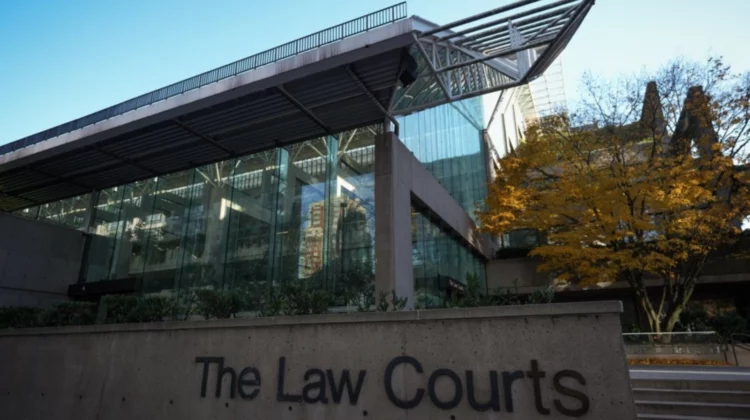
In response, the government has asked the British Columbia Supreme Court for a six-month extension to amend the legislation. This request stems from the case Nicholas v. Attorney General (Canada), which challenges discriminatory provisions affecting Indigenous identity and status rights.
The case has reignited debate around how Canada defines First Nations status, who qualifies for it, and how historical injustices continue to shape modern legal frameworks.
Understanding the Court’s Decision
Section 6(1)(d) Declared Unconstitutional
In August 2025, the B.C. Supreme Court ruled that Section 6(1)(d) of the Indian Act violates the Canadian Charter of Rights and Freedoms. This section deals with individuals who were historically enfranchised, meaning they lost their Indian status under earlier government policies, along with their descendants.
The court found that this provision discriminates against those individuals and their families by denying them equal recognition under the law. As a result, the section was declared invalid.
However, instead of striking it down immediately, the court suspended its ruling for 10 months. This pause was intended to give the federal government time to introduce legislative changes that would correct the discrimination.
Why the Suspension Matters
The suspension created a legal buffer, allowing the government to maintain the current framework temporarily while preparing reforms. Without it, the problematic section would have become invalid right away, potentially creating confusion and uneven application of the law nationwide.
The original deadline for reform was April 30, 2026. With that date now passed, the government is seeking additional time to finalize its response.
Bill S-2 and the Push for Broader Reform
A Legislative Fix in Progress
To address the court’s concerns, the federal government introduced Bill S-2, which aims to amend the Indian Act and remove discriminatory provisions tied to enfranchisement.
At first glance, the bill appears to directly respond to the Nicholas ruling. However, its scope expanded significantly during Senate review.
Senate Adds the Second-Generation Cut-Off
One of the most consequential amendments to Bill S-2 involves eliminating the second-generation cut-off rule. This rule, introduced in 1985, limits the ability of individuals to pass on Indian status if two consecutive generations have children with non-status partners.
In practical terms, this means that many families eventually lose status entirely, even if they maintain strong cultural and community ties.
The Senate’s decision to include this broader reform transformed Bill S-2 from a targeted fix into a more comprehensive overhaul of status eligibility.
The Debate Over Consultation and Delay
Government موقف: More Time Needed
Indigenous Services Canada has argued that eliminating the second-generation cut-off requires extensive consultation with First Nations communities. Officials say such a significant change could have far-reaching impacts on membership, resources, and governance.
From the government’s perspective, rushing this process could create unintended consequences.
Critics Argue Delay Perpetuates Inequality
Many Indigenous advocates and legal experts disagree. They argue that consultation is being used as a reason to delay justice rather than advance it.
Zoë Craig-Sparrow, vice-president of Justice for Girls and a member of the Musqueam Indian Band, has been particularly vocal. She criticized the government’s approach, saying that frameworks like the United Nations Declaration on the Rights of Indigenous Peoples are meant to uphold rights, not delay them.
Her concerns reflect a broader frustration among Indigenous communities who feel that systemic inequities are being prolonged under the guise of careful policymaking.
Personal Stories Highlight Real-World Impact
Kathryn Fournier’s Testimony
Kathryn Fournier, one of the plaintiffs in the Nicholas case, recently spoke before the House of Commons Standing Committee on Indigenous and Northern Affairs. She shared how enfranchisement has affected her family across generations.
Fournier emphasized that the Senate’s amendments to Bill S-2 address not only her case but also other longstanding issues within the Indian Act. She urged lawmakers not to delay the bill’s passage.
Her testimony underscores how legal definitions of status are not abstract concepts but deeply personal realities that shape identity, belonging, and rights.
Zoë Craig-Sparrow’s Family مستقبل
Craig-Sparrow’s situation illustrates the stakes of the second-generation cut-off. She describes herself as the “end of the line” in her family’s status eligibility.
If the law remains unchanged, her children will not be recognized as First Nations under federal law. This loss of status carries significant consequences, including the inability to inherit property or exercise certain constitutionally protected rights, such as fishing.
Her family’s history is tied to a landmark Supreme Court case that affirmed Indigenous fishing rights. Yet without status, those rights may not extend to the next generation.
Legal Tensions and the Risk of Unequal Application
Government’s Argument for Extension
In its request to the court, the federal government warned that allowing the ruling to take immediate effect without new legislation could result in uneven application of the Indian Act across Canada.
Different regions might interpret or implement the changes inconsistently, creating legal uncertainty.
To avoid this, the government is seeking an extension until October 30, 2026.
Plaintiffs Push Back
Lawyers representing the Nicholas plaintiffs strongly oppose the extension. Ryan Beaton, lead counsel, argues that the court’s ruling already provides a clear and immediate remedy.
According to Beaton, removing the suspension would fix the constitutional violation without waiting for new legislation.
He also expressed disappointment over what he described as a political standoff surrounding the Senate’s amendments.
Broader Implications for Indigenous Rights
A Legacy of Discrimination
The Indian Act has long been criticized for its role in regulating and often restricting Indigenous identity. Provisions like enfranchisement and the second-generation cut-off are seen as tools of assimilation that have fragmented families and communities.
The Nicholas case is part of a larger pattern of legal challenges aimed at dismantling these discriminatory structures.
فرصة لإعادة البناء
For many advocates, this moment represents an opportunity to move beyond piecemeal fixes and toward meaningful reform.
Eliminating the second-generation cut-off could significantly expand the number of individuals recognized as First Nations, reshaping community demographics and access to rights.
However, it also raises complex questions about resources, governance, and self-determination.
What Happens Next
Court Decision Pending
The B.C. Supreme Court has not yet issued a final decision on the government’s request for an extension. However, it has granted an interim suspension, temporarily maintaining the status quo.
This means the contested section of the Indian Act remains in effect for now.
Parliamentary Review Continues
Meanwhile, the House Committee on Indigenous and Northern Affairs is continuing its review of Bill S-2. Further discussions are expected as lawmakers weigh the balance between urgency and thorough consultation.
Conclusion: A Critical Moment for Policy and Justice
Canada stands at a crossroads in its approach to Indigenous rights and legal reform. The Nicholas case has exposed deep flaws in the Indian Act, forcing the government to confront issues that have persisted for generations.
At the heart of the debate is a fundamental question: how to ensure fairness and equality without further delaying justice.